
A practical guide to workplace ear health in Scotland

TL;DR:
Unaddressed ear health problems caused by workplace noise often impair employee performance and well-being.
Employers have legal and moral responsibilities to conduct risk assessments, provide early detection, and implement controls.
Proactive collaboration with private clinics ensures faster, tailored care, effectively safeguarding workforce ear health.
When a member of staff quietly withdraws from team meetings, starts misreading written instructions, or repeatedly asks colleagues to repeat themselves, it is easy to attribute these signs to stress or disengagement. Far more often, the root cause is something entirely preventable: unaddressed ear health problems compounded by NHS Scotland audiology waits that stretch far beyond acceptable targets. For business owners and office managers in Glasgow and Edinburgh, the stakes are real. Hearing health affects productivity, team communication, legal compliance, and staff morale. This guide gives you a clear framework for protecting your employees and your business, without the confusion.
Key Takeaways
Point | Details |
Act on legal duties | Regular hearing checks and noise assessments are a legal requirement for many UK employers. |
Prepare a robust plan | Set up a practical, documented process using the hierarchy of controls and specialist support. |
Private clinics offer speed | Private ear health services can significantly reduce waiting times and lost productivity. |
Special cases need care | Provide extra adjustments and frequent checks for employees with existing hearing loss. |
Training beats checklists | Ongoing education and proactive partnerships boost compliance and real employee wellbeing. |
Understanding business responsibilities for ear health
Having seen the cost of inaction, it is vital to understand your legal and moral duties as an employer caring for staff ear health. UK law is clear and specific on this point. Under the Control of Noise at Work Regulations 2005, employers are required to assess and manage risks from workplace noise. This does not apply only to factories or construction sites. Open-plan offices with constant background noise, call centres where staff wear headsets for hours each day, and even busy reception areas in Glasgow and Edinburgh can generate cumulative noise exposure that warrants attention.
The HSE requires employers to conduct noise risk assessments and provide health surveillance, including regular hearing checks, for employees exposed above the upper action values, typically 85 dB(A). This is a legal duty, not a recommendation. Failing to meet it leaves your business exposed to significant financial penalties, civil claims from affected staff, and reputational damage that is far harder to repair than the cost of proper care.
The scale of the problem is worth pausing on. 17,000 people in the UK suffer deafness, tinnitus, or other ear conditions as a direct result of workplace noise every single year. Tinnitus, the persistent ringing or buzzing in the ears that results from noise damage, is irreversible. Once hearing is lost in this way, it cannot be fully restored. Prevention and early detection are the only tools available to employers.
Employees most at risk in Scottish urban workplaces include:
Call centre and customer service staff who wear headsets throughout the working day
Open-plan office workers in loud, densely populated environments
Hospitality staff in venues with background music or live events
Manufacturing and warehouse employees in Glasgow’s industrial areas
Building maintenance and facilities staff exposed to machinery
Understanding workplace regulations in this area is the foundation of any effective ear health strategy. Without this knowledge, even well-intentioned employers fall short.
“Occupational noise-induced hearing loss is entirely preventable, yet it remains one of the most common occupational illnesses in the UK. The responsibility lies firmly with the employer to assess risk, implement controls, and monitor employee health.”
Occupational health professionals play a key coordinating role here. They interpret surveillance data, advise on risk controls, and flag cases that need specialist attention. Integrating their input from the outset ensures your programme is both legally sound and genuinely effective.
Setting up a workplace ear health plan: What you need
Once you know your legal requirements, the next step is assembling the foundations for a proper ear health programme. This does not need to be complicated, but it does need to be structured. Reactive responses to hearing complaints are far less effective and far more costly than proactive, planned surveillance.

Start with a baseline noise risk assessment. This identifies which roles and environments pose the greatest risk, and it provides the evidence base for every decision that follows. Without this document, you cannot demonstrate compliance during an inspection, and you cannot prioritise resources appropriately.
The HSE recommends a clear schedule for hearing checks: a baseline check when an employee begins working in a noise-exposed role, followed by annual checks for the first two years, then checks every three years thereafter unless individual circumstances warrant more frequent monitoring. This timeline should be recorded and tracked for every eligible employee.
Documentation is non-negotiable. Maintain records of:
Risk assessments and noise measurements
Each employee’s surveillance schedule and results
Any referrals to specialist care
Hearing protection issued and fit-testing records
Employee training and awareness sessions
When selecting a service provider, private clinics often offer meaningful advantages over NHS pathways for occupational health purposes. Speed, flexibility, and the ability to schedule group appointments around your working day make them a practical choice for businesses. Reviewing the EARS Clinics background gives a clear picture of how regulated, accredited private care works in Scotland.
The hierarchy of controls is the structured approach the HSE expects employers to follow: first, engineer the problem away by reducing noise at source; second, apply administrative controls such as job rotation or quieter scheduling; and only third, introduce personal protective equipment such as ear defenders. Hearing protection with fit testing is a valid tool, but it must never substitute for engineering and administrative solutions.
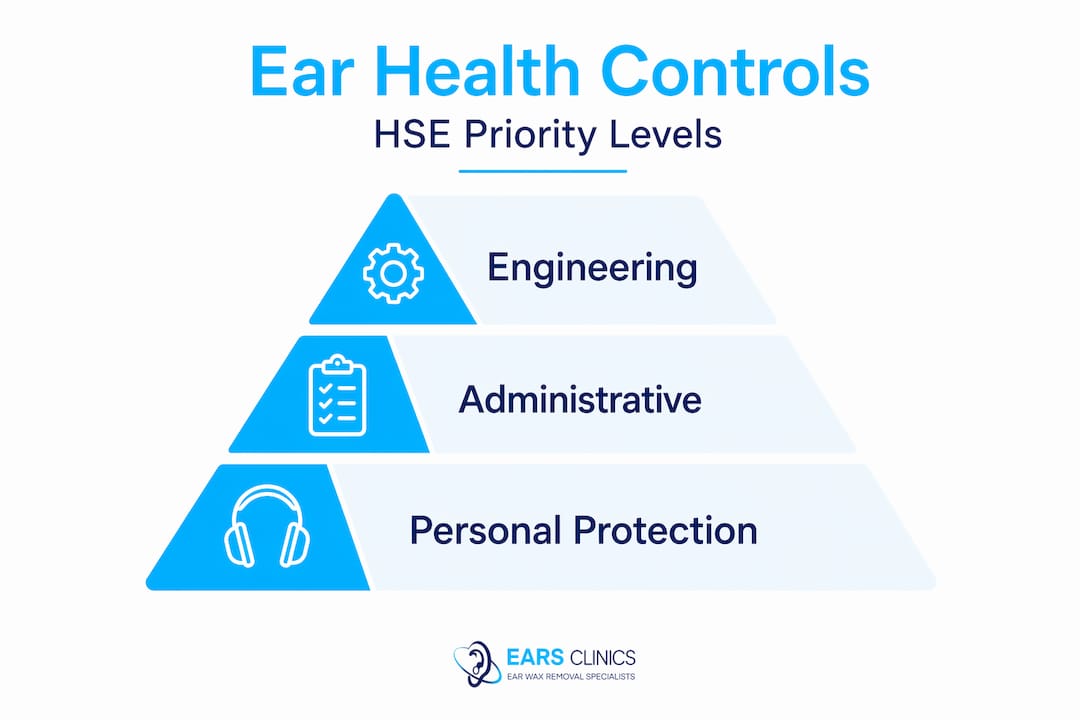
Control type | Example | Priority |
Engineering | Sound-absorbing panels, quieter machinery | First |
Administrative | Job rotation, quiet hours, shift limits | Second |
PPE | Ear defenders, earplugs with fit testing | Third |
Pro Tip: When documenting your noise risk assessment, photograph the working environment and include decibel readings at various times of day. This creates a much stronger audit trail and demonstrates genuine engagement with the risk, not just a box-ticking exercise.
Connecting your programme to established professional ear cleaning solutions for Scotland businesses is a straightforward way to ensure the clinical component of your plan is handled by specialists who understand both the regulatory context and the practical needs of employers.
How to run effective ear health checks in your business
With your plan ready, it is time to translate policy into action. Here is how to carry out checks efficiently and effectively in Glasgow and Edinburgh workplaces.
A structured approach to scheduling makes the difference between a programme that genuinely protects staff and one that quietly lapses after the first year. Follow these steps to keep your surveillance on track:
Identify all noise-exposed roles and create a register of employees requiring surveillance, noting start dates and next check due dates.
Arrange baseline checks for all new employees entering noise-exposed roles before or immediately upon starting.
Book annual follow-ups for all employees within their first two years of surveillance, using a calendar reminder system or occupational health software.
Review results with an occupational health professional, who can advise on whether any employee needs a referral for further assessment.
Update records after each check, noting any changes in hearing thresholds and adjusting the surveillance schedule if clinically indicated.
Communicate outcomes to employees in plain language, explaining what results mean and what steps follow if any concern is identified.
The comparison between NHS and private pathways is stark and practically relevant for Scottish businesses. NHS Scotland audiology waiting times significantly exceed targets, with documented cases of waits exceeding 1,800 days. That is nearly five years. For occupational health purposes, waiting five years for an ear assessment defeats the purpose of surveillance entirely.
Factor | NHS audiology | Private clinic (e.g. EARS Clinics) |
Waiting time | Months to years | Days to one week |
Appointment flexibility | Limited | Evening, weekend, same-day available |
Methods used | Standard | Microsuction, irrigation, instrumentation |
Occupational focus | General | Can be tailored to employer needs |
Regulatory status | NHS | HIS-registered, NHS-accredited |
Only 40.2% of patients in NHS Tayside were seen within 18 weeks for audiology services, according to performance data. For a business managing ongoing occupational health surveillance, this simply is not workable. Private providers including those listed among the top Glasgow ear clinics offer a practical alternative that fits around operational demands.
It is also worth noting that practitioners involved in occupational hearing checks should hold relevant qualifications. Businesses requiring assurance on clinical standards should look for evidence of accredited training for checks when evaluating providers. At EARS Clinics, all Aural Care Specialists are NHS-accredited and operate under Healthcare Improvement Scotland registration.
Booking private assessments in Glasgow and Edinburgh can be done quickly, often with same-day availability, making it straightforward to respond when an employee reports symptoms without waiting months for an NHS appointment.
Addressing special cases and ongoing support for employees
Some employees require an extra level of care. Here is how to ensure everyone stays supported and safe, including those with pre-existing hearing loss or conditions that place them at elevated risk.
Staff with existing hearing loss, tinnitus, or conditions such as perforated eardrums need a more tailored approach. They are more vulnerable to further damage from noise exposure, and they may need more frequent monitoring than the standard three-year cycle. The HSE guidance on health surveillance recognises that high-risk employees, including those with pre-existing loss or heightened sensitivity, need more frequent checks and specialist oversight. Private services are particularly well-suited to managing these cases quickly and without the delays that make NHS pathways impractical for ongoing occupational support.
The RNID recommends several practical adaptations for employees with hearing loss, including:
Vibrating or visual fire alarms and emergency alerts
Clear visual signage for all safety-critical information
Deaf awareness training for line managers and colleagues
Regular noise audits in areas where the employee works
Written summaries of verbal briefings and meetings
These adjustments are both a legal requirement under the Equality Act 2010 and a straightforward way to retain experienced staff who might otherwise struggle in an unsupportive environment. Awareness training for managers does not need to be lengthy or expensive. A well-structured half-day session can meaningfully change how teams communicate and support colleagues with hearing difficulties.
Ongoing education matters too. Many employees are unaware that earwax build-up, a very common and easily treated condition, can significantly affect hearing and concentration. Circulating information about symptoms, encouraging staff to seek prompt care, and removing the stigma from asking for help are all part of a genuinely supportive workplace culture. Linking staff to resources such as specialist training for complex needs ensures that the clinical team supporting your workforce is equipped to handle a range of presentations.
Pro Tip: Include ear health in your annual employee health and wellbeing communications. A short note before Noise Action Week each May, for example, reinforces the message without requiring a formal programme update.
What most guides miss: What truly delivers employee ear health improvements
Compliance documentation and scheduled checks are necessary. They are not sufficient. The businesses that see genuine, lasting improvements in employee ear health share a common characteristic: they treat ear health as an ongoing relationship with their workforce rather than a periodic administrative task.
The evidence that public sector waiting times undercut improvement efforts is not new. The 2023 Scottish Audiology Review accepted recommendations for systemic improvements, yet progress remains slow, with the RNID continuing to urge publication of waiting times and meaningful workforce planning. Two years on, the practical reality for employers in Glasgow and Edinburgh has not changed. An employee referred through NHS channels may wait years before being seen. By that point, the opportunity to prevent further deterioration has very likely passed.
The hidden value in using private providers proactively cannot be overstated. When an employee reports symptoms of blocked ears or reduced hearing, acting within days rather than months removes the issue before it affects performance, confidence, or attendance. The cost of a single private appointment at £60 for an adult is modest compared to the cost of a skilled employee underperforming for months while waiting on an NHS list.
What truly works, in our experience, is this: administrative clarity combined with a trusted clinical partner. When your occupational health records are accurate, your check schedule is maintained, and you have a private provider who can see employees quickly, the system functions as it should. Staff feel valued. Problems are caught early. Legal requirements are met without drama.
Professional ear care solutions for Scottish businesses exist precisely because this need is real and growing. The most effective businesses in Glasgow and Edinburgh are already building these partnerships rather than waiting for a problem to force their hand.
Professional ear health solutions for your business
For Glasgow and Edinburgh businesses ready to put these recommendations into practice, EARS Clinics provides accredited, expert ear health care that fits around your operational needs.
EARS Clinics is Healthcare Improvement Scotland registered, NHS-accredited, and one of the few fully regulated ear healthcare clinics in Scotland. Our Aural Care Specialists use microsuction, irrigation, and instrumentation to deliver safe, effective care for adults and children from age two. Appointments for over-18s are priced at £60, with same-day and flexible scheduling available across Glasgow and Edinburgh. Whether you need individual staff assessments, support for employees with complex needs, or guidance on building a workplace ear health programme, we are here to help. Visit EARS Clinics to book or to speak with a specialist about your business’s needs.
Frequently asked questions
How often should workplace hearing checks be conducted for staff exposed to noise?
Baseline checks should be followed by annual checks for the first two years of noise exposure, then every three years unless individual health circumstances require a more frequent schedule.
Why choose private ear health services for employees in Glasgow and Edinburgh?
Private clinics offer considerably shorter wait times and far more flexible appointments than NHS audiology departments. With NHS Scotland audiology waits regularly exceeding targets, private care is the practical choice for businesses that cannot afford months of unresolved hearing issues affecting staff performance.
What adaptations are required for staff with existing hearing loss?
Employers should provide vibrating alarms and deaf awareness training, along with visual fire plans and regular noise audits, to ensure workplace safety and legal compliance under the Equality Act 2010.
Is providing hearing protection enough to satisfy legal requirements?
No. The hierarchy of controls requires employers to first reduce noise at source through engineering solutions, then apply administrative controls, before turning to PPE such as ear defenders as a last resort rather than a primary strategy.
Recommended