
How to prevent ear wax buildup: 2026 guide

TL;DR:
Ear wax, or cerumen, naturally protects and lubricates the ear canal but can cause impaction, especially in older adults or those using in-ear devices. Preventative care involves avoiding object insertion, keeping ears dry, and seeking professional help when signs of blockage or discomfort appear. Safe removal methods like microsuction, performed by regulated clinicians, are recommended over home interventions such as irrigation or candling.
Ear wax, known clinically as cerumen, is a natural substance produced by glands in the outer ear canal to protect, lubricate, and defend against bacteria and debris. Most adults can prevent ear wax buildup by leaving the ears largely alone and supporting their natural self-cleaning process. Yet ear wax impaction affects 5% of healthy adults and rises sharply to 57% in older adults, making it one of the most common ear complaints seen in clinical practice. Understanding what disrupts the ear’s natural wax migration, and how to support it safely, is the foundation of good ear hygiene. Professional techniques including microsuction, irrigation, and manual instrumentation exist for when prevention is not enough.
What causes ear wax buildup?
Ear wax accumulates when the ear canal cannot clear cerumen as fast as it produces it. Several factors disrupt this balance, and knowing which ones apply to you is the first step in reducing your risk.
Anatomy plays a larger role than most people realise. Narrow or hairy ear canals physically slow the outward migration of wax, making professional monitoring more important for people with these features. The ear canal is not a straight tube; its curves and dimensions vary considerably between individuals.
Age is a consistent risk factor. As we get older, cerumen tends to become drier and less mobile, and the jaw movements that naturally help push wax outward become less effective. This explains why impaction is far more prevalent in older adults and why routine ear checks become more valuable with age.
The following factors are the most common ear wax buildup causes seen in clinical practice:
In-ear devices. Hearing aids and earbuds block natural wax migration, acting as physical barriers that push cerumen back into the canal. Regular device users are at significantly higher risk of impaction.
Cotton buds. Inserting cotton buds compacts wax deeper into the canal rather than removing it. This is one of the most common self-inflicted causes of blockage.
Earplugs. Frequent use of foam or silicone earplugs carries a similar risk to earbuds, particularly for musicians, swimmers, and shift workers who wear them daily.
Overproduction. Some individuals simply produce more cerumen than average, a trait that is partly genetic and partly related to skin conditions such as eczema.
Recognising the symptoms of ear wax buildup matters because impaction does not always feel dramatic. Hearing loss affects 63.3% of patients with impacted wax, while earache occurs in 61.3%, tinnitus in 53.5%, and a sensation of fullness in 48.5%. These figures show that most people with impaction experience multiple symptoms simultaneously, not just one.
Safe daily habits to prevent ear wax buildup
The most effective prevention strategy for most people is to avoid interfering with the ear’s natural cleaning process. The ear canal migrates wax outward naturally, and most interventions people attempt at home actually work against this mechanism. The following routine supports, rather than disrupts, that process.
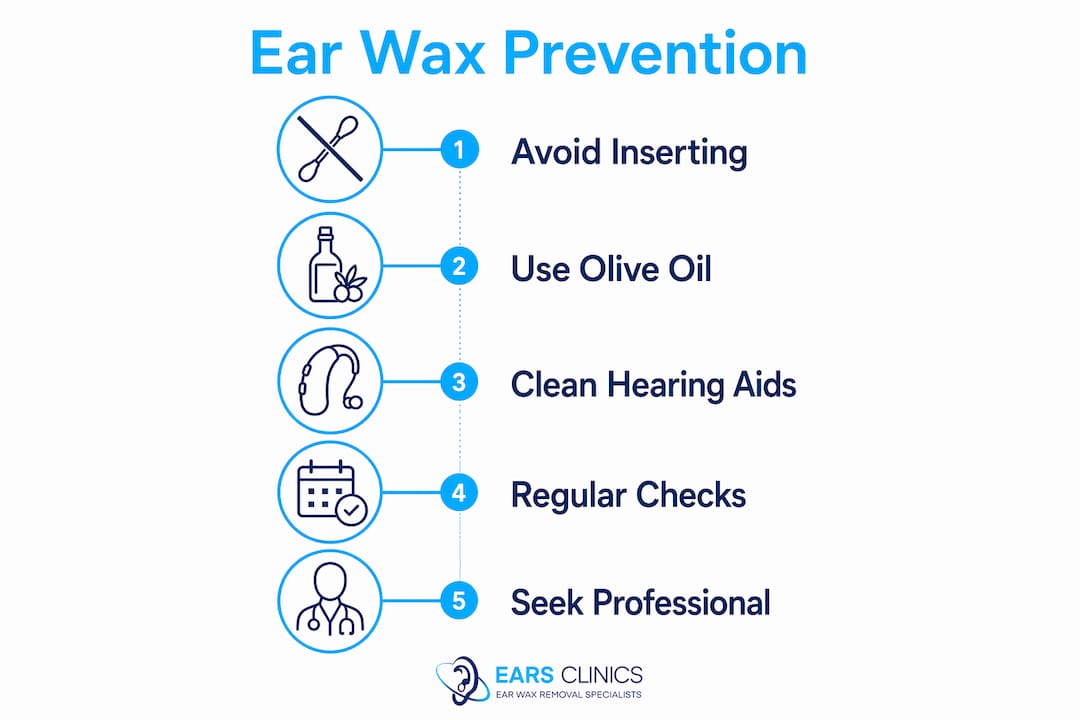
Clean only the outer ear. Use a warm, damp washcloth to wipe the outer ear and the entrance to the canal. Go no further. The skin of the canal is delicate, and anything inserted risks pushing wax inward or causing abrasion.
Keep ears dry after swimming or bathing. Trapped moisture softens the skin of the canal and can encourage wax to swell and block the passage. Tilt your head gently to each side after washing your hair or swimming to allow water to drain naturally.
Limit in-ear device use where possible. If you wear hearing aids or use earbuds for extended periods, users of in-ear devices need tailored prevention plans involving regular professional monitoring. Schedule routine ear checks every six to twelve months with a qualified clinician.
Use softening drops sparingly. Over-the-counter cerumenolytic drops, such as olive oil or sodium bicarbonate preparations, can help soften wax and support its outward migration. Use them for a few days at a time when you notice wax accumulating, not as a daily routine. Overuse of ear drops can irritate canal skin, leading to dermatitis or infection.
Schedule regular ear checks if you are in a high-risk group. Older adults, hearing aid users, and those with narrow canals benefit from professional review at least once a year, even without obvious symptoms.
Pro Tip: Warm olive oil applied with a dropper, two to three drops per ear, used for three to five consecutive evenings, is one of the most clinically supported home softening methods. It does not remove wax; it simply makes natural migration easier.
Hearing aid users deserve particular attention here. Cleaning the device itself regularly reduces the amount of debris introduced into the canal. Follow the manufacturer’s guidance and ask your audiologist or aural care specialist to check your canals at every hearing aid fitting or review appointment.

Home care vs. professional removal: where is the line?
Knowing when to stop self-treating and seek professional help is one of the most practical ear hygiene tips available. Home care has clear limits, and exceeding them causes more problems than it solves.
What is safe at home is limited to outer ear cleaning, softening drops used short-term, and keeping the ears dry. Nothing should enter the ear canal. Ear candling, despite its popularity, has no clinical evidence of benefit and carries documented risks including burns and canal blockage from candle wax.
“Ear care should only be performed by trained, competent clinicians following best practice standards and regulated by Healthcare Improvement Scotland (HIS) or Care Quality Commission (CQC).” — EARS Clinics best practices
Seek professional assessment when you notice any of the following:
Persistent hearing reduction that does not resolve after a few days of softening drops
Pain or discomfort inside the ear canal
Tinnitus that has appeared or worsened recently
A sensation of fullness that does not clear
Any discharge or odour from the ear
A history of perforated eardrum, ear surgery, or recurrent infections
These symptoms indicate that professional removal using microsuction, irrigation, or manual instrumentation is needed. Attempting to clear a blocked canal at home when any of these signs are present risks worsening the impaction or causing injury. For guidance on step-by-step ear care before and after professional treatment, Earhealthservice provides clear patient resources on its website.
Irrigation is contraindicated for patients with perforated eardrums, active ear infections, diabetes, or immune compromise. This is why a clinical assessment before any procedure matters. A trained specialist selects the method based on your medical history and the clinical presentation of your ear, not a one-size-fits-all approach.
How do professional ear wax removal methods compare?
Professional removal methods include microsuction, irrigation, and manual instrumentation, each suited to different clinical situations. Understanding the differences helps you have an informed conversation with your clinician.
Method | How It Works | Best Suited For | Key Consideration |
Microsuction | Gentle suction removes wax under direct visualisation | Most patients; preferred by NICE | Dry procedure; no water used |
Irrigation | Warm water flushes the canal after softening | Soft wax; no perforation history | Water must be body temperature (~37°C) |
Manual instrumentation | Specialist tools remove wax under magnification | Hard or impacted wax; complex cases | Requires experienced clinician |
Microsuction is recommended by NICE as the safest removal technique in most cases. It uses a fine suction probe under direct visualisation, meaning the clinician sees exactly what they are doing throughout the procedure. There is no water involved, which makes it suitable for patients with a history of perforated eardrums or ear surgery.
Irrigation uses a controlled flow of water warmed to body temperature to flush softened wax from the canal. The water temperature is clinically significant: water that is too cold or too warm can cause vertigo and dizziness. This is why irrigation performed by an untrained person at home carries genuine risk, even with commercially available kits.
Manual instrumentation uses fine probes or curettes to remove wax under magnification. It is particularly effective for hard, dry, or deeply impacted wax that neither suction nor water can shift easily. Practitioners select this method when the clinical picture demands it, not as a default.
Pro Tip: When choosing a clinic for ear wax removal, confirm that the practitioners are NHS-accredited Aural Care Specialists and that the clinic is registered with Healthcare Improvement Scotland (HIS) or the Care Quality Commission (CQC). Regulation is not a formality; it is your assurance of safe, standardised care.
Professional removal also restores the ear’s natural self-cleaning ability. Once a significant blockage is cleared, the canal can resume its outward wax migration, which means that timely professional care actively supports long-term prevention.
Key takeaways
Preventing ear wax buildup requires avoiding interference with the ear’s natural cleaning process, managing known risk factors, and seeking professional care from HIS or CQC-regulated clinicians when self-care is not sufficient.
Point | Details |
Ears are self-cleaning | Avoid inserting objects into the canal; let natural migration do its work. |
Risk factors are specific | Hearing aid users, older adults, and those with narrow canals need regular professional monitoring. |
Home care has clear limits | Softening drops used short-term are safe; anything beyond outer ear cleaning carries risk. |
Professional methods differ | Microsuction, irrigation, and manual instrumentation are selected based on your clinical history. |
Regulation matters | Only seek care from clinicians accredited by HIS or CQC to guarantee safe, standardised treatment. |
What we have learned from years of ear care practice
The single most common mistake we see is well-intentioned interference. Patients arrive having used cotton buds daily for years, genuinely believing they were keeping their ears clean. In reality, they had been compacting wax progressively deeper into the canal, often creating the very blockage they were trying to prevent.
The ears are remarkably capable organs. Given the chance, they manage cerumen without any help from us in the vast majority of cases. The role of good ear hygiene is not to clean the canal but to avoid disrupting what the canal does naturally.
We also see a persistent misconception that professional ear care is only necessary when symptoms become severe. Waiting until hearing loss is noticeable or pain develops means the wax has already caused significant impaction. Routine checks, particularly for hearing aid users and older adults, catch accumulation early and make removal straightforward rather than complex.
One more observation worth sharing: not every clinic offering ear wax removal operates to the same standard. Regulation by Healthcare Improvement Scotland (HIS) or the Care Quality Commission (CQC) is the clearest signal that a clinic follows evidence-based protocols and employs trained specialists. Choosing a regulated provider is not overcautious. It is the right decision for your long-term ear health.
— EARS
Professional ear care at EARS clinics
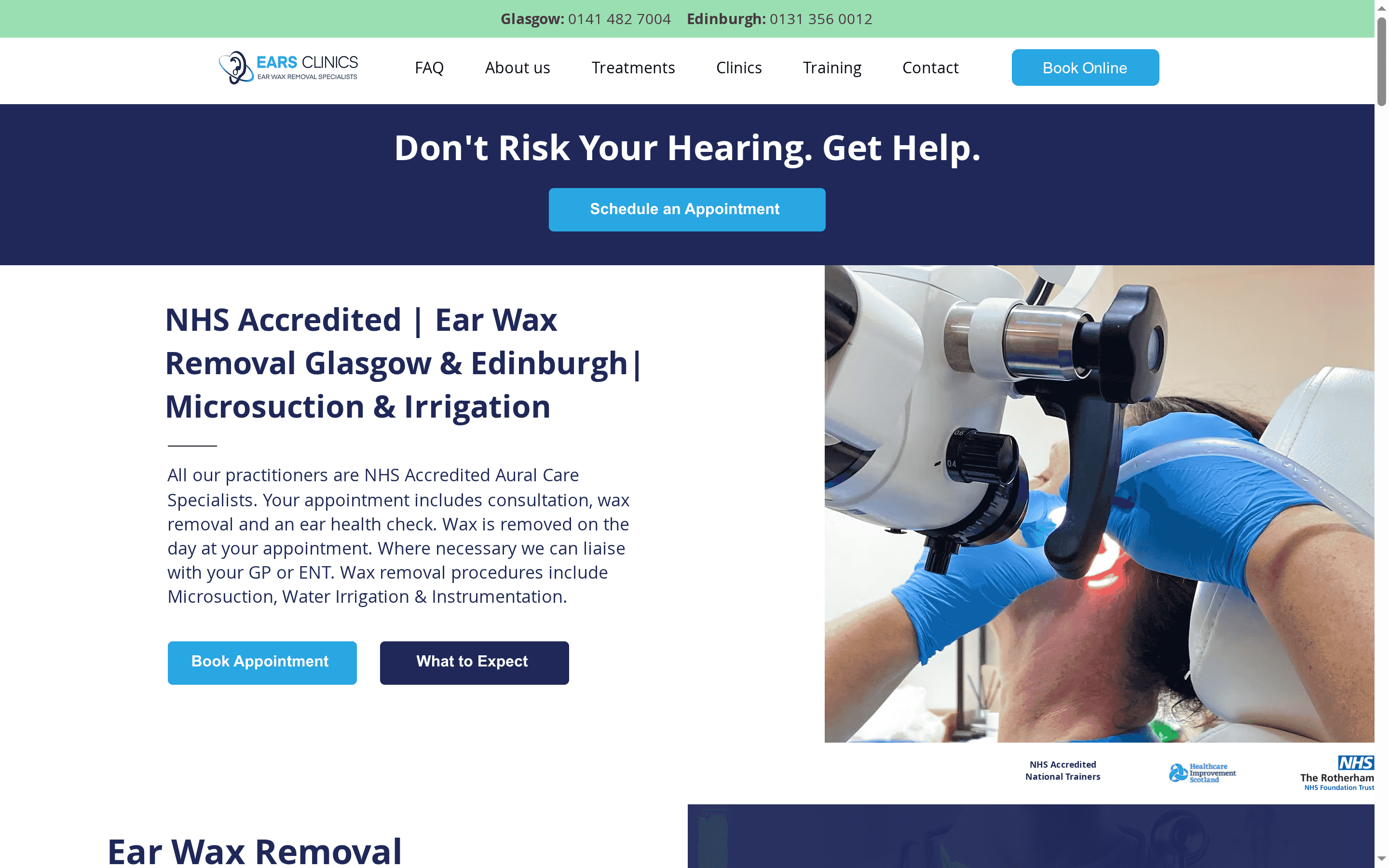
Earhealthservice provides NHS-accredited ear wax removal at EARS Clinics in Glasgow and Edinburgh, with same-day appointments and home visits available. Our Aural Care Specialists assess each patient individually and select the most appropriate procedure, whether microsuction, irrigation, or manual instrumentation, based on your medical history and clinical presentation. Appointments start from £60 for adults and £75 for under-18s. Explore the full range of ear wax removal procedures available at EARS Clinics, or book an ear health check to get a clear picture of your ear health today.
FAQ
What is the best way to prevent ear wax buildup?
The most effective approach is to avoid inserting anything into the ear canal and to let the ear’s natural migration process work. For high-risk individuals such as hearing aid users and older adults, regular professional monitoring is the most reliable preventive measure.
Are cotton buds safe for cleaning ears?
Cotton buds are not safe for use inside the ear canal. They compact wax deeper rather than removing it, which is one of the leading causes of impaction seen in clinical practice.
When should i see a professional about ear wax?
Seek professional assessment if you experience persistent hearing reduction, earache, tinnitus, a sensation of fullness, or any discharge from the ear. These are recognised symptoms of ear wax impaction that require clinical evaluation.
Is microsuction safe for everyone?
Microsuction is recommended by NICE as the safest removal method for most patients and does not use water, making it suitable for those with a history of perforated eardrums or ear surgery. Your clinician will confirm suitability based on your individual history.
How often should i have my ears professionally checked?
Most adults with no specific risk factors benefit from a professional ear check every one to two years. Hearing aid users, older adults, and those with narrow or hairy canals should consider checks every six to twelve months.
Recommended