
Professional ear health checks for safe wax removal 2026

Ear wax buildup disrupts daily life with muffled hearing, uncomfortable fullness, and persistent ringing. NHS waiting times in Scotland often stretch beyond six weeks, leaving you struggling with worsening symptoms. Private NHS-accredited clinics offer same-day appointments with trained specialists who use advanced techniques to restore your hearing safely. This guide walks you through recognising symptoms, preparing properly, understanding examination procedures, and accessing fast professional care.
Key takeaways
Point | Details |
Recognise symptoms early | Hearing loss, fullness, tinnitus, and dizziness signal wax blockage requiring professional assessment. |
Prepare correctly | Avoid cotton buds 24-48 hours before appointment; understand costs (£60 adults, £75 children, £180 home visits). |
Understand examination | Otoscope checks and hearing screening ensure safe personalised treatment based on ear condition. |
Choose microsuction | Safest removal method with minimal discomfort, suitable for all ages including children from 2 years. |
Follow aftercare | Proper post-procedure care reduces infection risk by 40% and maintains hearing improvement. |
Understanding ear wax and when to seek professional ear health checks
Your ears produce wax naturally to protect the canal and trap debris. This self-cleaning mechanism usually works perfectly. Sometimes wax accumulates faster than it clears, creating blockages that affect your quality of life.
Symptoms indicating problematic buildup include:
Gradual or sudden hearing loss
Persistent feeling of fullness or pressure
Discomfort or earache
Tinnitus (ringing or buzzing sounds)
Dizziness or balance issues
Left untreated, wax blockage worsens these symptoms and impacts work, social interactions, and general wellbeing. Professional checks ensure safety because NHS-accredited private clinics in Scotland are registered with Healthcare Improvement Scotland (HIS) and follow strict clinical safety standards. These specialists identify underlying conditions that DIY methods miss, preventing complications like infections or eardrum damage.
Timely professional intervention stops minor discomfort becoming serious problems. Trained aural care specialists examine your ears thoroughly before recommending treatment, ensuring appropriate care for your specific situation. Understanding NHS ear care standards helps you recognise the quality markers of proper professional service.
Scotland’s regulated clinics meet rigorous safety requirements, giving you confidence in their expertise. When symptoms persist beyond a few days, professional assessment becomes essential rather than optional.
Prerequisites: what you need before your ear health check appointment
Proper preparation ensures smooth appointments and prevents complications during examination or removal. Your actions in the days before visiting a clinic directly affect treatment safety and effectiveness.
Avoid cotton buds or ear candles 24-48 hours before your appointment. Regular use of cotton buds often pushes ear wax deeper, increasing impaction risk and potential injury. These tools compress wax against the eardrum rather than removing it, creating harder blockages that complicate professional treatment.
Understand clinic costs before booking:
£60 for adults (over 18)
£75 for children and young people (under 18)
£180 for home visits if mobility issues prevent clinic attendance
Clinics accept patients from age 2 upwards, including those with complex medical needs or conditions affecting ear health. Bring clear notes detailing your symptoms, duration, previous ear problems, and any relevant medical history. This information helps specialists tailor treatment to your situation.
Never attempt DIY removal using irrigation kits, syringes, or other home methods. These approaches risk serious damage without proper visualisation of your ear canal. Following ear wax removal preparation tips ensures you arrive ready for safe, effective treatment.
Pro Tip: Keep a symptom diary for three days before your appointment, noting when hearing loss or discomfort worsens. This pattern helps specialists understand your wax buildup behaviour and choose the most effective removal method.
Step-by-step process of a professional ear health check and diagnosis
Your appointment begins with a thorough examination before any removal procedure. This systematic approach ensures safety and identifies the best treatment path for your specific ear condition.
Initial consultation: The specialist discusses your symptoms, medical history, and any previous ear problems. You describe when symptoms started, their severity, and how they affect daily activities.
Otoscope examination: Using a lighted instrument, the specialist examines your ear canal and eardrum visually. This reveals wax location, consistency, and whether complications like infection or perforation exist.
Hearing screening: A brief hearing test assesses current impairment levels and detects unrelated issues requiring attention. Professional ear health checks include assessment of hearing and ear canal to detect conditions beyond simple wax buildup.
Condition evaluation: The specialist determines which removal method suits your ear anatomy and wax type. Hard, dry wax requires different approaches than soft, moist accumulation.
Contraindication check: They verify no infections, perforations, or other factors that would make immediate removal unsafe. Sometimes preliminary treatment or referral proves necessary.
Treatment discussion: You receive clear explanation of recommended removal method, what to expect during the procedure, and estimated duration.
This comprehensive ear health check process takes 10-15 minutes before actual removal begins. The thoroughness prevents complications and ensures appropriate care for your individual needs. Specialists adjust their approach based on examination findings rather than applying one-size-fits-all solutions.
Safe and recommended ear wax removal techniques
Three primary methods exist for professional wax removal, each with specific benefits and appropriate use cases. Understanding these techniques helps you feel confident about your treatment choice.
Microsuction represents the gold standard for ear wax removal. Microsuction is the safest and most precise ear wax removal technique, using low-pressure suction under direct visual control to minimise trauma. The specialist uses a microscope or loupes for magnified viewing whilst gently suctioning wax away. This method suits all ages from 2 years upwards, works regardless of wax consistency, and carries minimal infection risk because no water enters the ear canal. The procedure feels slightly odd but rarely causes discomfort.

Irrigation involves flushing the ear canal with warm water to dislodge and wash out wax. This traditional method works well for soft wax when the eardrum remains intact. However, it carries higher risks if misapplied, including potential perforation or introducing infection through water. Specialists use irrigation selectively after confirming suitability through examination.
Instrumentation employs manual tools like curettes or hooks to extract wax near the ear entrance. This requires skilled operators and steady hands. It works best for visible wax not deeply impacted, offering precision for specific situations.
Method | Best For | Key Advantage | Main Consideration |
Microsuction | All wax types, all ages | Safest, most precise | Slightly noisier than other methods |
Irrigation | Soft wax, intact eardrum | Effective for suitable cases | Higher complication risk if misused |
Instrumentation | Wax near entrance | Precise removal of visible wax | Requires highly skilled operator |
Your specialist chooses based on examination findings rather than personal preference. Microsuction predominates in modern practice because it handles virtually any situation safely. Understanding types of ear wax removal methods helps you discuss options confidently with your practitioner.
Pro Tip: If you have eardrum sensitivity, previous perforation, or hearing aids, request microsuction specifically when booking. This method offers maximum safety for vulnerable ear structures.
Common mistakes and troubleshooting during ear health checks and wax removal
Certain errors compromise treatment safety and effectiveness. Recognising these pitfalls helps you avoid complications and ensures optimal outcomes from professional care.
Cotton bud misuse tops the list of dangerous practices. These seemingly harmless tools push wax deeper into the canal, creating impacted masses that worsen blockage. Some people perforate their eardrum attempting to reach wax, causing permanent damage requiring specialist repair.
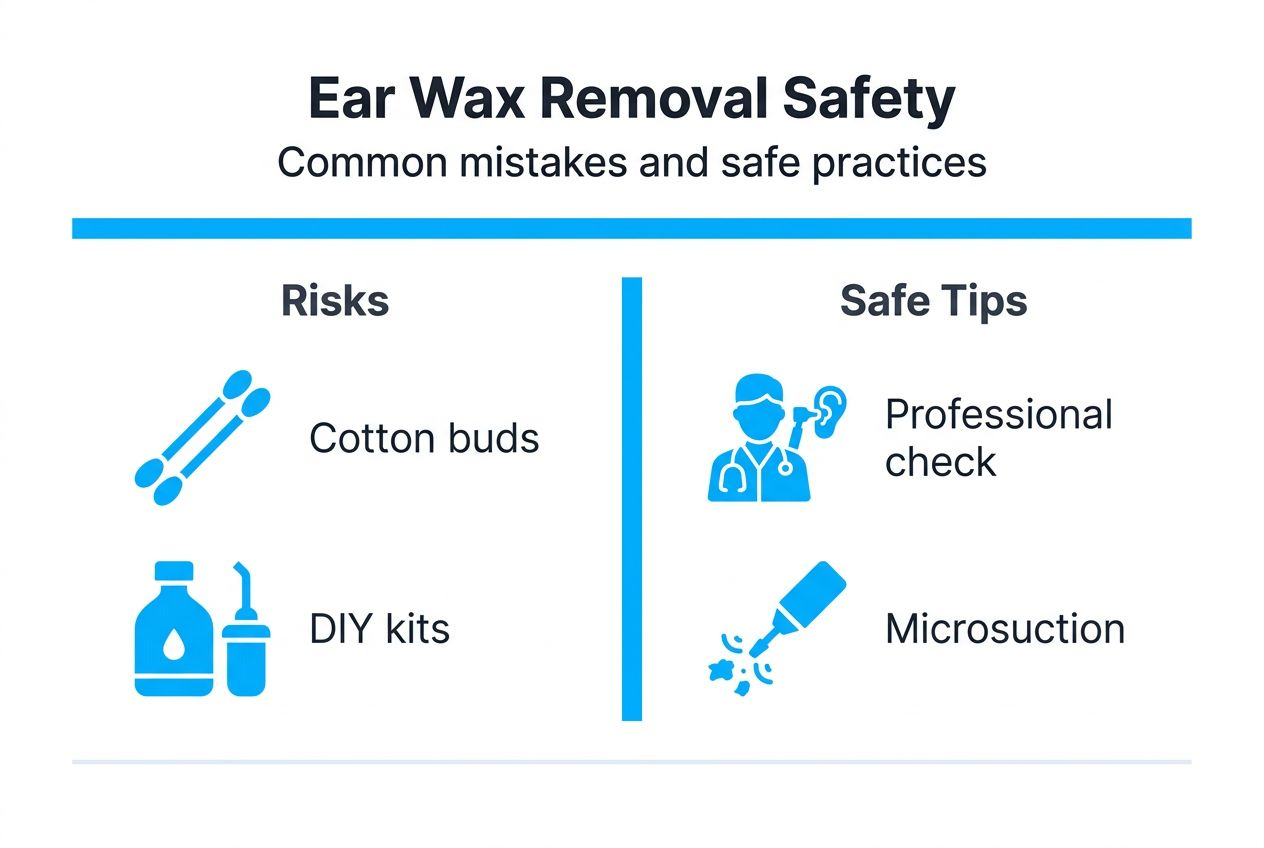
DIY irrigation attempts rank second among risky behaviours. Misapplication of irrigation without proper assessment can cause ear drum perforation or infection, complications requiring medical intervention beyond simple wax removal. Home irrigation kits lack the precision and safety features of professional equipment.
Skipping professional assessment increases complication risk dramatically. Self-diagnosing wax buildup without examination means missing infections, perforations, or other conditions requiring different treatment. What feels like simple wax might indicate serious underlying problems.
Ignoring discomfort during treatment allows potential damage to progress. Properly performed removal should feel unusual but not painful. Report any sharp pain, severe pressure, or distress immediately so your specialist can adjust technique.
Using ear candles represents perhaps the most dangerous home remedy. These hollow cones create no suction, remove no wax, and frequently cause burns, canal blockage from candle residue, or eardrum perforation from hot wax drips.
Proper procedures and professional training eliminate these risks entirely. Specialists visualise your ear throughout treatment, adjusting continuously to maintain safety. Avoiding common ear care mistakes starts with recognising that professional intervention beats home remedies every time.
Expected outcomes and timelines after ear wax removal treatment
Realistic expectations help you appreciate treatment benefits and maintain results through proper aftercare. Professional removal delivers rapid improvement when performed correctly.
Same-day appointments provide immediate relief in over 90% of cases following treatment completion. Most people notice dramatically improved hearing the moment wax exits their ear canal. The muffled sensation vanishes, sounds become crisp, and pressure feelings disappear.
Typical outcomes include:
Instant hearing restoration to pre-blockage levels
Immediate relief from fullness and pressure
Tinnitus reduction or elimination within 24-48 hours
Improved balance if dizziness accompanied your symptoms
Enhanced hearing aid performance for device users
Proper aftercare maintains these results and prevents complications. Post-procedure aftercare reduces infection risk by 40% compared to neglecting care instructions. Keep ears dry for 24 hours after treatment, avoid swimming for 48 hours, and never insert objects into the canal during healing.
Timeline | Expected Progress | Action Required |
Immediate | Hearing restored, pressure relieved | Keep ears dry, avoid loud noise |
24 hours | Tinnitus subsiding, balance normalising | Resume normal activities gently |
48 hours | Full symptom resolution | May return to swimming, sports |
1 week | Complete healing, normal ear function | Schedule follow-up if advised |
Follow-up appointments suit stubborn cases where complete removal required multiple attempts. Your specialist advises if return visits prove necessary. Monitor for unusual symptoms like persistent pain, discharge, or renewed hearing loss, reporting these promptly.
Maintaining results involves sensible ear hygiene without aggressive cleaning. Your ears self-clean naturally when left alone. Understanding ear wax removal outcomes and aftercare ensures lasting benefits from your treatment.
Professional ear health checks and wax removal services in Scotland
Accessing expert care becomes straightforward when you know where to find regulated, experienced practitioners. Scotland’s NHS-accredited private clinics combine clinical excellence with convenient appointment options.
EARS Clinics operates specialist centres in Glasgow and Edinburgh, providing same-day appointments that eliminate lengthy NHS waiting times. Healthcare Improvement Scotland registration guarantees adherence to the strictest safety standards in ear healthcare. Aural care specialists use advanced microsuction equipment alongside traditional irrigation when appropriate, tailoring treatment to your specific needs.
Home visit services accommodate those with mobility challenges, bringing professional care directly to you. Transparent pricing (£60 adults, £75 under-18s, £180 home visits) removes financial uncertainty from your decision.
Comprehensive guidance supports your journey from symptom recognition through recovery. Reading the ear wax removal step-by-step guide prepares you thoroughly for your appointment. The detailed microsuction procedure guide explains exactly what happens during treatment. Exploring types of ear wax removal procedures helps you understand which method suits your situation best.
Book your professional ear health check today for fast symptom relief backed by clinical expertise and regulatory oversight.
Frequently asked questions
What symptoms indicate I need a professional ear health check?
Hearing loss, persistent fullness or pressure, tinnitus (ringing sounds), dizziness, and discomfort signal potential wax blockage requiring assessment. If symptoms last more than three days or worsen despite home care, professional examination becomes necessary to prevent complications.
What happens during an ear health check appointment?
Appointments involve otoscope examination of your ear canal and eardrum, hearing screening to assess impairment levels, and evaluation of wax type and location. Specialists check for contraindications like infection before recommending the safest removal method for your situation.
How long do I wait for private ear wax removal in Scotland?
Private NHS-accredited clinics offer same-day appointments compared to NHS waiting times often exceeding six weeks. Many clinics accommodate urgent requests within hours for severe symptoms, providing immediate relief when needed most.
Is professional ear wax removal safer than home remedies?
Professional removal by trained specialists eliminates risks associated with cotton buds, irrigation kits, or ear candles. Direct visualisation during treatment prevents eardrum damage, infection introduction, or wax impaction that home methods commonly cause.
How much does professional ear wax removal cost in Scotland?
Regulated private clinics charge £60 for adults, £75 for children under 18, and £180 for home visits. These fixed prices include examination, removal procedure, and aftercare guidance without hidden fees or surprise charges.
Recommended