
What is manual ear instrumentation? A guide to safe ear care
TL;DR:
Manual ear instrumentation remains a safe and effective method for removing stubborn ear wax, especially when other approaches are unsuitable. It involves precise mechanical extraction using small instruments under direct visualisation, often following a wax softening step to ensure safety. Access to expert techniques in Glasgow and Edinburgh allows patients to benefit from skilled clinicians who combine manual tools with other removal methods for optimal results.
Many people assume that manual ear instrumentation is an outdated technique, eclipsed by newer technology like microsuction. In reality, it remains one of the most clinically effective methods for removing stubborn ear wax, particularly when other approaches fall short. If you are in Glasgow or Edinburgh and struggling with blocked ears, understanding what is manual ear instrumentation can help you make an informed decision about your care. This guide explains the procedure, the tools involved, when it is recommended, and why it continues to play a vital role in professional ear health services today.
Key Takeaways
Point | Details |
Manual instrumentation defined | Manual ear instrumentation uses specialised tools under direct vision to safely remove ear wax. |
Indications for use | It is preferred for very hard, adherent wax and for patients sensitive to noise. |
Safety and skill | Performed only by trained clinicians to minimise risks of ear canal or eardrum injury. |
Complementary technique | Often combined with microsuction for best effectiveness in professional ear care. |
Access in Scotland | EARS Clinics in Glasgow and Edinburgh offer professional manual instrumentation services. |
What is manual ear instrumentation and how does it work?
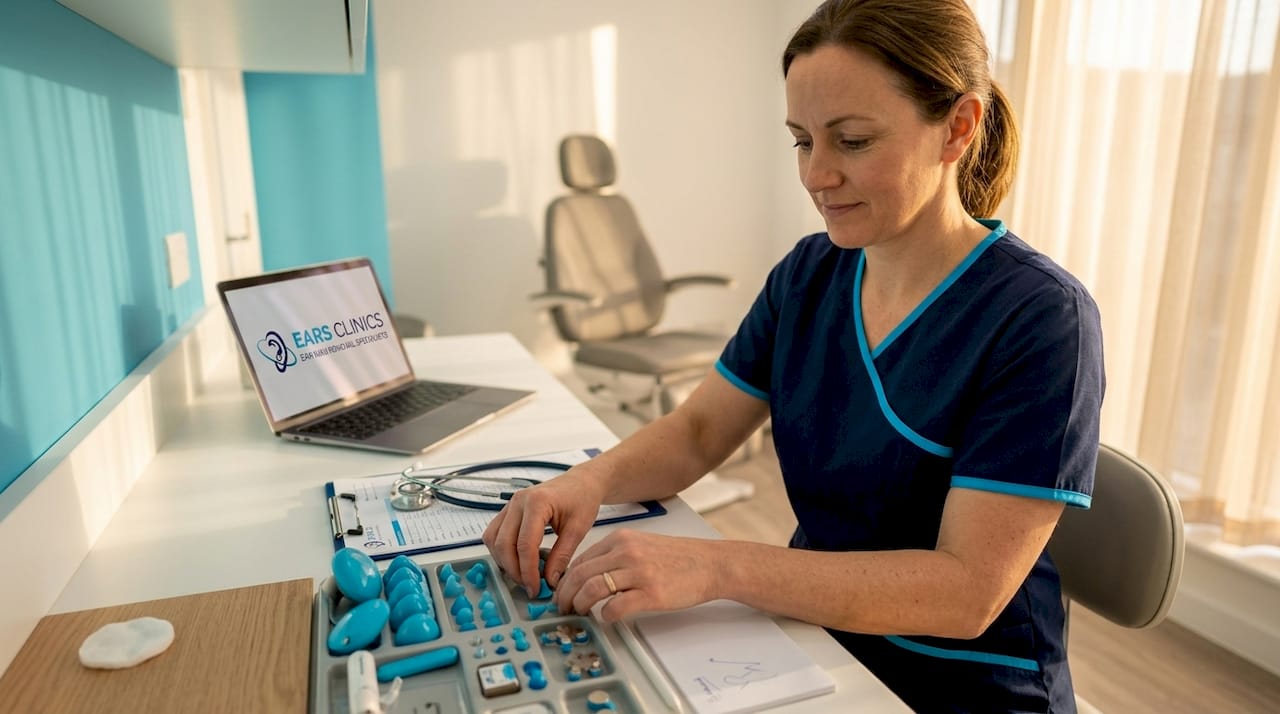
Manual ear instrumentation is the use of small, handheld instruments to physically remove cerumen (ear wax) from the ear canal under direct visualisation. Unlike irrigation, which flushes wax out with water, or microsuction, which draws it out using gentle suction, manual instrumentation involves precise mechanical extraction. According to clinical guidance, manual ear instrumentation uses curettes, hooks, and forceps under direct visualisation to remove cerumen safely after softening.
The procedure begins with the clinician reviewing your ear health history and examining the canal using an otoscope (a handheld instrument with a light and magnifying lens) or a microscope for greater detail. This step is not optional. Seeing clearly before inserting any instrument is what separates safe professional practice from risky at-home attempts.
Common instruments used in manual ear instrumentation include:
Blunt plastic loops or curettes, used to scoop and drag wax outward
Small hooks designed to navigate around wax deposits
Jobson Horne probes, a slender double-ended tool used to break up or loosen packed wax
Micro-forceps and alligator forceps for gripping and extracting larger pieces
Aural specula (funnel-shaped attachments) to open and illuminate the canal
Once the canal has been assessed, the clinician will typically apply a wax-softening agent and allow it to work for 15 to 30 minutes. This softening step is important because it reduces the force required for removal, protecting the delicate canal wall. The actual extraction then follows a careful sequence:
The patient is positioned comfortably, usually reclined or semi-upright
The clinician attaches a speculum to the otoscope for clear access and lighting
The selected instrument is gently inserted to the edge of the wax
Using a sweeping outward motion, wax is gradually extracted
The canal is re-examined after each pass to confirm safe progress
For a broader overview, this step-by-step ear wax removal guide explains how each technique fits within a full clinical appointment.
Tools and techniques specific to manual ear instrumentation
Choosing the right instrument is not guesswork. Clinicians assess the hardness, position, and adherence of the wax before selecting a tool. Curette tip size is matched to canal and wax type: larger loops work best for soft wax, while smaller angled tips are more effective for hard, compacted deposits, with sweeping motions used throughout to avoid canal wall trauma.
Here is how practitioners approach tool selection:
Soft, loosely packed wax responds well to a blunt plastic curette using a single sweeping motion
Hard, adherent wax often requires a Jobson Horne probe first, then a smaller angled curette to work around the edges
Wax near the tympanic membrane (eardrum) demands extreme care and typically calls for smaller, angled instruments with minimal insertion depth
Wax in narrow or curved canals may need flexible or angled instruments to follow the natural curve without causing discomfort
One detail worth knowing: disposable plastic curettes are now standard in professional practice because they eliminate any cross-infection risk. Reusable metal instruments, while still available, require sterilisation between patients. At a regulated clinic, this distinction matters for your safety.
The technique itself follows a consistent principle regardless of tool: always move outward and downward, never inward. Pushing wax deeper is one of the most common mistakes in non-professional settings. The motion is deliberate and controlled, not forceful.
Pro Tip: If you have a history of ear infections, perforated eardrums, or previous ear surgery, always tell your clinician before any instrumentation begins. These factors change which tools and techniques are appropriate for you.
For a direct comparison between approaches, this overview of microsuction versus manual instrumentation outlines the clinical differences in detail.
When is manual instrumentation recommended and how does it compare with other methods?
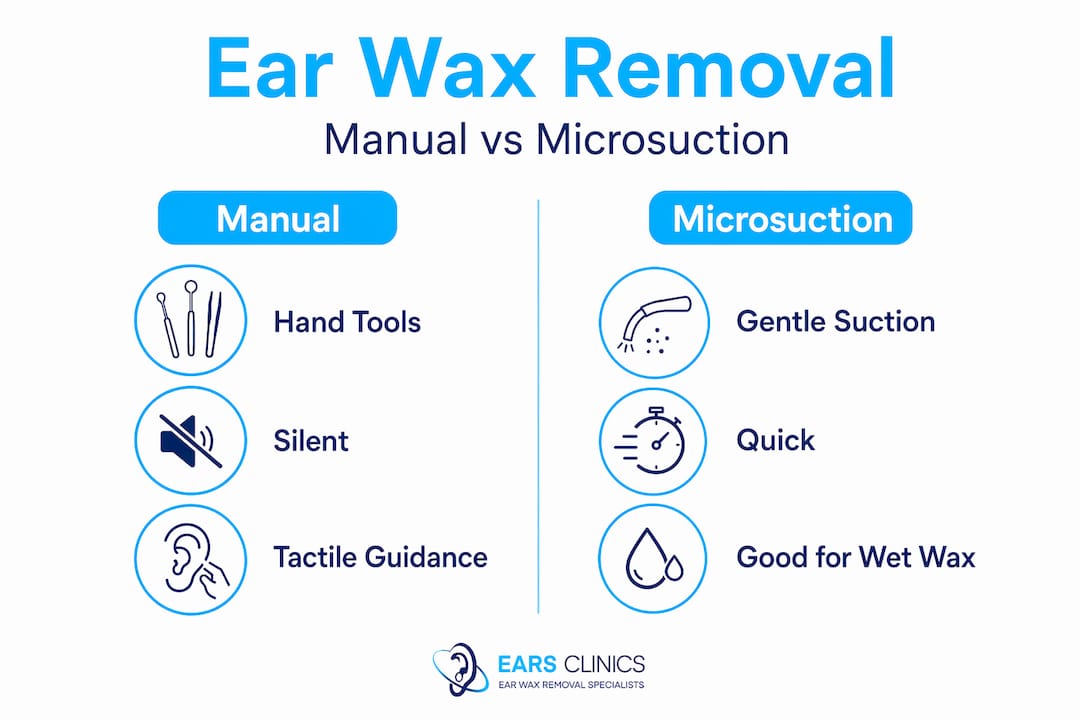
Not every case of ear wax buildup calls for the same solution. Manual instrumentation is particularly suited to situations where other methods are either contraindicated or less effective. Manual removal excels for very hard wax and is silent, making it suitable for patients sensitive to noise; microsuction is faster for softer wax and widely accessible; irrigation is often the first method tried.
Method | Best suited for | Key advantage | Limitation |
Manual instrumentation | Hard, adherent, or deeply lodged wax | Silent; no water; precise control | Requires high clinician skill |
Microsuction | Soft to moderate wax; perforated eardrum | Fast; widely used; minimal mess | Produces noise; unsuitable for severe tinnitus |
Irrigation | Soft wax; general buildup | Non-invasive; familiar technique | Requires softening; contraindicated with perforations |
Manual instrumentation is the preferred approach when:
Wax is too hard or dry to be suctioned effectively
The patient has a perforated eardrum and water-based methods carry risk
Significant noise sensitivity or tinnitus makes microsuction uncomfortable
Previous irrigation has failed to clear the canal
Wax is heavily adherent to the canal wall
The silence of manual instrumentation is a genuine clinical advantage, not a minor footnote. For someone with severe tinnitus, even brief exposure to the noise of suction equipment can be distressing. Manual tools produce no mechanical sound, making the procedure far more tolerable. Research also confirms that manual removal in children can be safe and effective when carried out by appropriately trained staff. You can also read about the specific advantages of microsuction to understand where that technique fits best.
Pro Tip: If your GP has previously attempted irrigation without success, ask specifically about manual instrumentation at your next appointment. It is often more effective for the wax types that resist water-based removal.
Safety considerations and patient experience of manual ear instrumentation
Safety in manual ear instrumentation depends almost entirely on the skill of the clinician performing it. Manual instrumentation carries moderate risk of canal trauma but remains safe when performed by trained clinicians under direct visualisation with necessary equipment.
The most common concern patients raise is whether the procedure will be painful. In most cases, it is not. Wax softening reduces the resistance during extraction, and a skilled clinician applies only minimal pressure. You may feel a sensation of movement or mild pressure, but sharp pain is not a normal part of the experience and should prompt you to stop the clinician immediately.
Key safety protocols at a professional clinic include:
Full ear health history taken before any instrument is used
Direct visualisation maintained throughout the procedure
Wax softening applied in advance to reduce force needed
Disposable or sterilised instruments used for every patient
Post-procedure canal check to confirm full clearance and canal integrity
“Professional manual ear instrumentation should always be performed under direct visualisation by a trained and regulated clinician. The difference between a safe outcome and a canal injury often comes down to that single requirement.”
Patients are typically positioned in a reclined or semi-reclined chair, which gives the clinician the best access and keeps the patient comfortable. The appointment usually takes between 20 and 45 minutes, depending on the extent of the buildup and the method required.
Follow-up appointments are worth considering if you have a history of recurrent wax problems. Regular checks allow a clinician to monitor wax production patterns and intervene before a full blockage develops.

Pro Tip: Avoid using cotton buds before your appointment. They compact wax further into the canal and make manual extraction more difficult and time-consuming.
For more detail on how professional ear wax removal is managed safely, read our guide on patient safety for ear wax removal.
How to access professional manual ear instrumentation in Glasgow and Edinburgh
If you are based in Glasgow or Edinburgh, access to professional ear care using manual instrumentation does not require a GP referral or a lengthy wait. Private clinics registered with Healthcare Improvement Scotland (HIS) offer regulated, same-day appointments for ear wax removal across both cities.
What to expect from a professional booking process:
A brief consultation to review your symptoms and ear health history
Otoscopic examination to confirm the presence and nature of the wax
Selection of the most appropriate removal method for your specific case, which may include manual instrumentation, microsuction, irrigation, or a combination
Clear aftercare advice to reduce the likelihood of future buildup
EARS Clinics operates across Glasgow and Edinburgh as one of the few HIS-registered ear care providers in Scotland, treating patients from 2 years of age. Clinicians follow NICE-recommended guidelines and assess each patient individually before selecting a removal technique. This assessment is not a formality. It directly determines whether manual instrumentation, microsuction, or irrigation is safest and most effective for your particular ear canal and wax type.
Pricing is straightforward: £60 for over-18s, £75 for under-18s, and £180 for a home visit if travel or mobility is a concern. There are no hidden charges, no requirement to pre-treat with drops for weeks, and no waiting months for a routine appointment.
You can explore the full range of ear wax removal procedure types or find out what to expect at ear health checks before booking.
Why manual ear instrumentation remains an essential skill in modern ear care
There is a tendency in healthcare to assume that newer automatically means better. Microsuction has become the dominant method in private ear care over the past decade, and for good reason. It is fast, clean, and effective for a wide range of patients. But that rise has come with an unintended consequence: some clinicians have allowed their manual instrumentation skills to lapse.
This matters because manual instrumentation is often combined with microsuction by ENT specialists, especially to loosen very hard wax before suctioning, a step many patients are unaware of. When a clinician lacks confidence with manual tools, that combined approach becomes unavailable to them. The patient then faces either a failed microsuction attempt or a referral elsewhere.
In our experience at EARS Clinics, the most effective outcomes for complex wax cases come from practitioners who are genuinely proficient with both techniques. Manual instrumentation with a Jobson Horne probe to break up a compacted plug, followed by microsuction to clear the remnants, is simply more effective than either method used in isolation. The microsuction procedure guide explains how we approach those combined appointments in practice.
The noise-free nature of manual instrumentation also deserves more recognition than it typically receives. Tinnitus affects a significant portion of the population, and for those patients, a silent procedure is not a minor preference but a genuine clinical requirement. Manual instrumentation fills that gap precisely.
Keeping manual skills sharp is not nostalgia. It is sound clinical practice, and patients in Glasgow and Edinburgh deserve access to clinicians who can offer both.
Book your professional ear wax removal with EARS Clinics in Scotland
If blocked or muffled ears are affecting your daily life, professional ear care is closer than you might think.

EARS Clinics provides NHS-accredited ear wax removal across Glasgow and Edinburgh, carried out by trained Aural Care Specialists who are registered with Healthcare Improvement Scotland. Whether your situation calls for manual instrumentation, microsuction, or irrigation, your clinician will assess your ear health and choose the safest, most effective approach for you. All procedures follow NICE guidelines and strict safety protocols. Appointments are available in clinic, and home visits are offered at £180 for those who cannot travel. Booking is straightforward online or by phone. Explore the full range of ear wax removal procedures, learn more about our aural care specialists, or find out what an ear health check involves before you arrive.
Frequently asked questions
Is manual ear instrumentation safe for removing ear wax?
Yes, manual ear instrumentation is safe when performed by a trained clinician under direct visualisation; trained clinicians using direct visualisation significantly reduce the risk of canal trauma or eardrum injury.
How does manual ear instrumentation differ from microsuction?
Manual instrumentation physically extracts wax using small tools, while microsuction draws it out using gentle suction; manual tools loosen hard wax before suctioning removes it, and the two methods are frequently used together for the best result.
Can manual instrumentation be used for children?
Yes, but it requires an experienced clinician and careful technique; manual removal in children carries a small risk of canal injury and is most appropriate when performed by specialists trained in paediatric ear care.
Do I need to prepare before a manual ear instrumentation appointment?
Your clinician will typically apply wax-softening agents during the appointment; softening wax for 15 to 30 minutes before manual removal makes the procedure safer and more effective. Share your full ear health history in advance so your clinician can plan appropriately.
Recommended