
Best way of cleaning ear wax: your 2026 guide
TL;DR:
For most adults, leaving earwax alone is the best approach because the ear is naturally self-cleaning.
Safe removal methods include softening drops and professional procedures like microsuction, while avoiding cotton swabs and ear candles.
Earwax, known clinically as cerumen, is a natural substance produced by the ear canal to protect against dust, bacteria, and debris. For most adults, the best way of cleaning ear wax is simply to leave it alone, because the ear is largely self-cleaning and excessive interference causes more harm than good. When removal is genuinely necessary, safe options include softening drops such as mineral oil or carbamide peroxide, and professional procedures like microsuction, irrigation, and manual instrumentation. Cotton swabs and ear candles are not safe options and should be avoided entirely.
Why the best approach is often to do nothing
Earwax protects the ear canal by acting as a barrier against germs, dust, and particles. This is not a passive role. Cerumen has mild antibacterial properties and keeps the delicate skin of the ear canal moisturised and healthy.
The ear canal also has a natural migration process. Skin cells move outward from the eardrum toward the ear opening, carrying wax with them. Jaw movements from chewing and talking assist this process. For most adults, this mechanism removes wax without any help.
Cleaning too often disrupts this process. It strips the protective layer, irritates the canal, and can stimulate the glands to produce even more wax. Cotton swabs push wax deeper into the canal and risk permanent eardrum damage. The clinical guidance is straightforward: do not put anything smaller than your elbow in your ear.
The ear canal is self-cleaning in most adults
Cerumen has antibacterial properties that protect against infection
Over-cleaning strips the ear’s natural defences
Cotton swabs compact wax and risk eardrum injury
Ear candles are ineffective and carry serious burn risks
Pro Tip: If your ears feel blocked after a shower, tilt your head to let water drain naturally. Avoid the urge to insert anything into the canal.
Scientific evidence supports minimal interference for most adults. Intervention should be reserved for cases where wax is causing symptoms such as hearing loss, fullness, or discomfort.
Safe at-home methods to soften ear wax
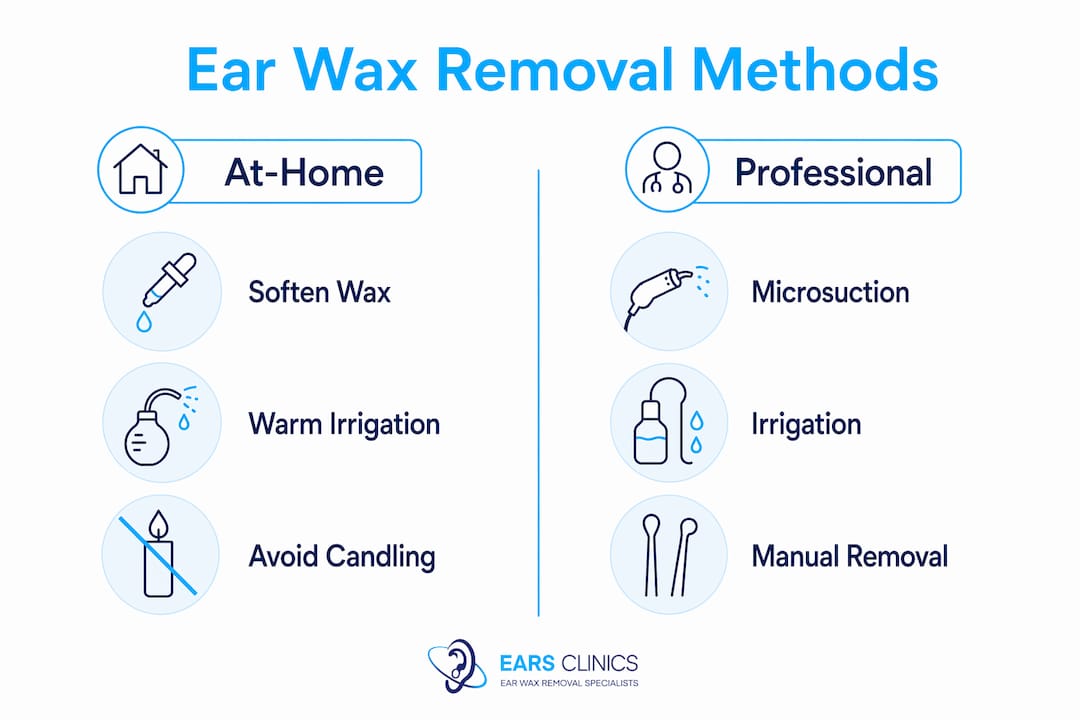
When wax does build up and causes symptoms, softening it at home is a reasonable first step, provided no contraindications are present. Safe softening agents include mineral oil, baby oil, glycerin, and carbamide peroxide drops. Each works differently: oils lubricate and soften the wax, while carbamide peroxide and hydrogen peroxide have an oxidising action that bubbles to loosen it.
Do not use any of these methods if you have a history of eardrum perforation, recent ear surgery, or an active ear infection. Applying drops to a perforated eardrum can cause pain and increase infection risk. If you are unsure of your ear health status, a clinical assessment should come first.
Follow these steps for safe at-home softening:
Warm the drops to body temperature by holding the bottle in your hand for a few minutes. Cold drops can cause dizziness.
Lie on your side with the affected ear facing upward.
Apply the recommended number of drops into the ear canal.
Stay in that position for 5 to 10 minutes to allow the solution to penetrate the wax.
Sit up and allow the liquid to drain onto a tissue.
Repeat once or twice daily for up to five days.
Softening wax before irrigation for 15 to 30 minutes improves clearance significantly. This step is recommended whether you are using a home syringe or attending a clinic.
Warm water irrigation at home can be done safely using a rubber bulb syringe, gently flushing the ear canal with body-temperature water. Head position and syringe angle matter. Tilt the head slightly and direct the stream toward the upper wall of the canal, not directly at the eardrum. After irrigation, dry the ear thoroughly with a low heat setting on a hairdryer held at a distance, or use alcohol-based drying drops to prevent moisture complications.
Ear candling is not a valid removal method. The residue found in the candle after use is candle wax, not cerumen. The procedure carries serious risks including burns to the face, ear canal, and eardrum. No credible clinical body endorses it.
Pro Tip: Always use drops at body temperature. Drops that are too cold or too warm can trigger temporary vertigo, which can be alarming and disorienting.
Professional ear wax removal methods compared
When home remedies fail or are contraindicated, professional removal is the correct course of action. Clinicians select the most appropriate technique based on the patient’s medical history, the type and location of the wax, and any clinical contraindications. The three main methods are microsuction, irrigation, and manual instrumentation.

Microsuction is the preferred method recommended by NICE because of its safety and effectiveness when performed by trained clinicians. It uses a fine suction device under microscopic visualisation to remove wax precisely without water exposure. This reduces the risk of vertigo, infection, and tympanic membrane trauma. It is suitable for patients with perforated eardrums, ear infections, or a history of ear surgery.
Irrigation and microsuction each have distinct advantages. Irrigation uses a controlled flow of body-temperature water to flush the canal. It is effective for softer wax but carries a small risk of dizziness or tympanic membrane injury if performed incorrectly. Water must be at exactly 37°C. Cooler or warmer water can cause temporary vertigo or nausea. Manual instrumentation uses small tools under direct visualisation to remove wax mechanically, and is particularly useful for harder or more compacted deposits.
Method | How it works | Best suited for | Key contraindications |
Microsuction | Suction under microscopic view | All wax types, complex ear histories | Very narrow canals (relative) |
Irrigation | Warm water flush | Soft or moderate wax | Perforated eardrum, active infection |
Manual instrumentation | Tool removal under direct view | Hard or compacted wax | Uncooperative patients, very narrow canals |
Improper irrigation technique can cause tympanic membrane trauma or postural vertigo. Clinician expertise ensures correct technique and appropriate patient assessment before any procedure begins. This is why professional ear wax removal should only be performed by trained, regulated clinicians following best practice standards.
Earhealthservice operates as EARS Clinics in Glasgow and Edinburgh, registered with Healthcare Improvement Scotland (HIS) and staffed by NHS-accredited Aural Care Specialists. All procedures are performed following the strictest clinical guidelines.
When should you seek professional help?
The safest earwax removal comes from allowing natural clearance. Professional intervention is reserved for symptomatic or obstructive cases. Knowing when to seek help is as important as knowing which method to use.
Seek professional assessment if you experience any of the following:
Sudden or gradual hearing loss in one or both ears
A feeling of fullness or pressure in the ear
Earache or discomfort without an obvious cause
Tinnitus (ringing, buzzing, or humming in the ear)
Discharge from the ear canal
Recurring wax build-up despite regular softening
Dizziness or balance problems
A clinical baseline exam before any home cleaning is critical. It rules out perforated eardrums, active infections, or other conditions that make home treatment unsafe. Without this assessment, patients risk worsening an underlying problem.
Children and patients with complex ear histories, including those with grommets, mastoid cavities, or previous ear surgery, require specialist assessment before any removal attempt. Earhealthservice is licensed and regulated to treat patients from 2 years of age, making it one of the few regulated ear healthcare clinics in Scotland equipped to manage these cases safely.
Self-treatment in the presence of contraindications carries real risk. Applying drops to an infected or perforated ear, or using a home syringe without clinical guidance, can cause pain, hearing damage, or introduce infection. When symptoms persist beyond a few days of home softening, professional review is the right next step.
Key takeaways
Professional microsuction is the safest and most clinically supported method for ear wax removal, but for most adults, leaving the ear to clean itself naturally remains the best approach.
Point | Details |
Leave wax alone when possible | The ear is self-cleaning; intervention is only needed when symptoms appear. |
Avoid cotton swabs and ear candles | Both cause harm. Cotton swabs compact wax; ear candles carry burn risks and do not remove cerumen. |
Use body-temperature drops at home | Mineral oil, glycerin, or carbamide peroxide drops soften wax safely when no contraindications are present. |
Microsuction is the preferred clinical method | NICE recommends microsuction for its precision, safety, and suitability across complex ear histories. |
Seek professional help for persistent symptoms | Hearing loss, ear pain, discharge, or recurring build-up all warrant a clinical assessment before further home treatment. |
Our view on ear wax care at EARS Clinics
The single most common mistake we see is over-cleaning. Patients arrive having used cotton swabs daily for years, and the result is compacted wax sitting hard against the eardrum, an irritated canal, and sometimes a minor infection. The ear does not need that kind of attention. It is one of the few parts of the body that genuinely works better when left alone.
That said, we also see the other extreme: patients who have waited months with significant hearing loss, assuming it would resolve on its own. When wax is truly obstructive, it will not clear without help. The key is recognising the difference between normal wax and a genuine blockage.
Microsuction is the method we use most frequently, and for good reason. It is precise, dry, and safe even for patients with perforated eardrums or a history of ear surgery. We can see exactly what we are doing throughout the procedure. That level of control is simply not possible with a home syringe or over-the-counter drops alone.
Our practical advice is this: use softening drops if you feel mild fullness or slight muffling. If symptoms do not improve within five days, or if you experience pain, discharge, or significant hearing loss, come in for an assessment. Do not wait, and do not reach for a cotton swab.
— EARS
Professional ear wax removal at EARS Clinics
Persistent ear wax build-up deserves proper clinical attention. Earhealthservice provides professional ear wax removal at EARS Clinics in Glasgow and Edinburgh, with same-day appointments and home visits available for patients who need them.
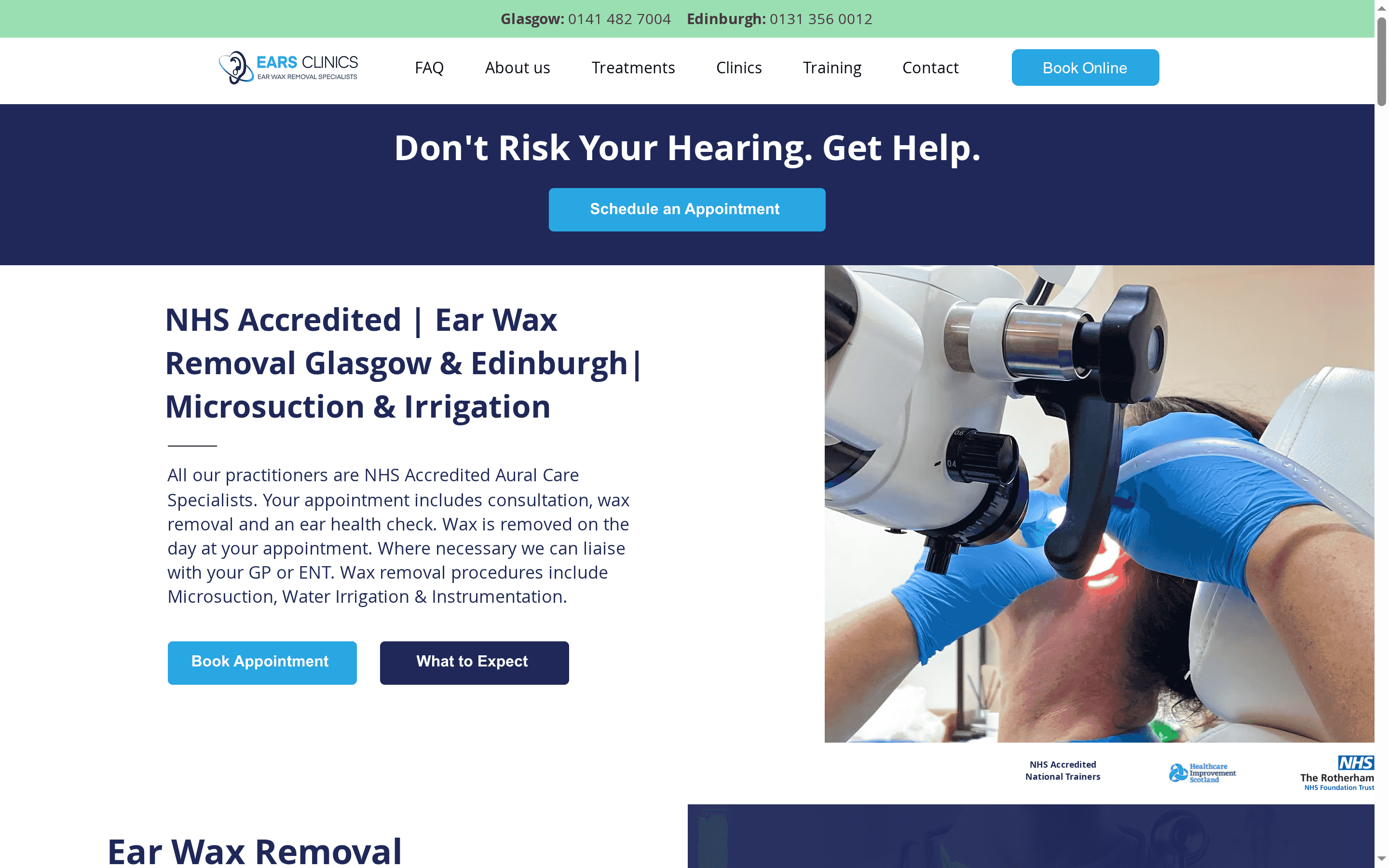
All procedures, including microsuction, irrigation, and manual instrumentation, are performed by NHS-accredited Aural Care Specialists in HIS-registered clinics. Appointments are available for patients from 2 years of age. Prices start at £60 for adults over 18, £75 for under-18s, and £180 for home visits. There are no pre-treatment preconditions and no lengthy waiting times. Book directly at earhealthservice.co.uk to speak with a specialist and receive the right care for your ears.
FAQ
What is the best way to clean ear wax safely?
The best approach for most adults is to leave the ear alone, as it cleans itself naturally. If wax causes symptoms, use body-temperature softening drops such as mineral oil or carbamide peroxide, and seek professional removal if symptoms persist.
Are cotton swabs safe for cleaning ears?
Cotton swabs are not safe for cleaning inside the ear canal. They push wax deeper, risk compacting it against the eardrum, and can cause permanent injury.
What is microsuction and why is it recommended?
Microsuction uses a fine suction device under microscopic visualisation to remove wax without water. NICE recommends it as the preferred method because it is precise, dry, and safe for patients with complex ear histories including perforated eardrums.
When should I see a professional about ear wax?
Seek professional assessment if you experience hearing loss, ear pain, discharge, tinnitus, or a feeling of fullness that does not resolve after five days of softening drops. These symptoms may indicate a blockage or underlying condition.
Is ear candling an effective way to remove ear wax?
Ear candling is not effective and is not recommended by any clinical body. The residue left in the candle is candle wax, not cerumen, and the procedure carries serious risks including burns to the ear and face.
Recommended