
Examples of hearing loss symptoms: your 2026 guide
- Jun 23
- 8 min read

TL;DR:
Early signs of hearing loss include difficulty hearing in noisy environments and asking for repeated speech. Sudden hearing loss requires urgent medical attention within 24 hours, especially if accompanied by dizziness or facial numbness. Recognizing subtle symptoms like sound confusion and social withdrawal can lead to earlier intervention and better outcomes.
Hearing loss is defined as a reduced ability to detect or understand sounds, and the examples of hearing loss symptoms adults most commonly report include difficulty following speech in noisy places, muffled voices, and a persistent ringing in the ears known as tinnitus. The World Health Organisation classifies hearing loss from mild to profound, with normal hearing defined as 20 dB or better. Recognising these signs early is what separates a manageable condition from one that quietly reshapes your daily life. This guide covers the full range of auditory symptoms, from the obvious to the overlooked, and explains when each one warrants urgent attention.
1. What are the most common examples of hearing loss symptoms?

The CDC identifies muffled speech, difficulty hearing high-pitched sounds, and trouble following conversations in noisy environments as the most significant signs of noise-induced hearing loss. These are also the symptoms adults most frequently describe when they first suspect a problem. Recognising them early gives you the best chance of getting appropriate care before the condition progresses.
Common hearing loss indicators include:
Difficulty hearing in noisy places. Restaurants, busy offices, and social gatherings become exhausting. You follow the shape of a conversation rather than the words themselves.
Muffled or unclear speech. Voices sound as though people are speaking through a wall or with their hand over their mouth.
Frequently asking others to repeat themselves. This is one of the earliest and most consistent signs of hearing loss adults notice.
Turning up the volume on the television or radio. If others in the room find your preferred volume uncomfortable, that is a reliable hearing loss indicator.
Tinnitus. A ringing, buzzing, or hissing sound in one or both ears, even in silence, is a common symptom associated with both noise-induced and age-related hearing decline.
Trouble hearing high-pitched sounds. Missing birdsong, children’s voices, or the high notes in music often signals early high-frequency hearing loss.
Pro Tip: If you notice two or more of these signs together, do not wait for them to worsen. Early testing is far more effective than late intervention, as the CDC emphasises that early detection is critical.
2. How do sudden vs gradual hearing loss symptoms differ?
Gradual hearing loss develops over months or years, and most adults do not notice the decline until it significantly affects communication. Most hearing loss develops gradually, caused by ageing, prolonged noise exposure, or earwax build-up. The slow pace is exactly why many patients arrive at a clinic years after symptoms began.
Sudden hearing loss is a different and more urgent matter. It can develop within hours or across a few days, sometimes overnight. 2026 NICE guidelines state that sudden hearing loss within three days requires urgent specialist referral within 24 hours, even if symptoms appear to improve.
Red flags that require immediate medical attention include:
Sudden loss of hearing in one ear
Facial numbness or weakness alongside hearing changes
Loss of balance or unexplained dizziness
Difficulty speaking that accompanies hearing decline
Persistent unilateral tinnitus with no obvious cause
The MSD Manual is clear that hearing loss accompanied by facial numbness or balance problems requires immediate evaluation to rule out serious underlying conditions. These are not symptoms to monitor at home.
Pro Tip: Note the exact date your symptoms started. Clinicians use this timeline to determine whether your case meets the threshold for urgent referral under current NICE guidance.
3. What are less obvious hearing loss indicators?
Not all hearing impairment symptoms announce themselves loudly. Many adults experience subtle signs for years before connecting them to their hearing. Harvard Health notes that hearing loss symptoms often present first as communication frustration and cognitive difficulty in social settings, rather than outright deafness.
Overlooked hearing loss indicators include:
Difficulty understanding speech on the phone. Without visual cues, the ear must work harder. Phone calls becoming consistently difficult is an early and reliable warning sign.
Feeling confused or detached in social situations. When you cannot follow a group conversation, the brain compensates by working harder. This produces fatigue that can feel like confusion or low mood.
Avoiding social situations. Withdrawing from gatherings, dinners, or group activities because they feel too effortful is a behavioural sign that often precedes a formal diagnosis.
Confusing similar speech sounds. Struggling to distinguish between “s” and “f,” or “p” and “b,” points to specific frequency loss rather than general volume reduction.
Certain sounds causing discomfort. Hyperacusis, where everyday sounds feel painfully loud, can accompany hearing loss and is a symptom worth reporting to a clinician.
These subtler symptoms of auditory issues are the ones most likely to be dismissed as tiredness, distraction, or social anxiety. Recognising them as potential hearing loss indicators changes the path forward.
4. How do hearing loss symptoms affect communication and quality of life?
Hearing loss reshapes communication in ways that extend well beyond missing words. The cognitive load of listening in difficult environments produces real fatigue, frustration, and, over time, withdrawal from the activities that matter most.
Effect | How it manifests |
Social withdrawal | Avoiding gatherings, restaurants, and group conversations |
Cognitive fatigue | Exhaustion after conversations requiring intense concentration |
Emotional impact | Frustration, embarrassment, and reduced confidence in social settings |
Relationship strain | Partners and family members report feeling unheard or ignored |
Work performance | Difficulty in meetings, on calls, or in open-plan offices |
The WHO hearing loss fact sheet distinguishes between those who are hard of hearing, with mild to severe loss, and those with profound loss. Even mild loss at the lower end of that scale produces measurable effects on communication and wellbeing. Addressing symptoms early reduces the cumulative impact across all these areas.
Understanding the broader effects on hearing health helps adults make the case to themselves for seeking assessment sooner rather than later.
5. What self-checks can adults use before seeing a clinician?
A reliable self-check starts with one key distinction: the difference between sound audibility and speech clarity. The CDC advises that difficulty understanding speech in noise tends to appear before overall volume reduction. If you can hear that someone is speaking but cannot make out the words, that is a speech clarity problem, and it is clinically significant.
Practical self-checks to try before your appointment:
Compare quiet and noisy environments. Can you follow speech easily at home but struggle in a café or at a family gathering? That contrast is a meaningful hearing loss indicator.
Test yourself on the phone. Make a call without using speakerphone. Note whether you struggle to follow the conversation even when the line is clear.
Track how often you ask for repetition. Keep a rough mental note over one week. If it happens daily, that frequency matters.
Note any ringing or discomfort. Record whether tinnitus is in one ear or both, and whether it is constant or intermittent.
Check for unilateral symptoms. Symptoms in one ear only carry a different clinical significance. Noting laterality and any accompanying facial or balance changes improves diagnostic accuracy when you speak to a clinician.
Knowing how to explain your symptoms clearly to a health professional makes your appointment more productive and reduces the risk of important details being missed.
6. When should you seek professional help for hearing symptoms?
Knowing when to act is as important as recognising the symptoms themselves. Harvard Health identifies frequently requesting repetition, missing phone calls, and social avoidance as the key indicators that prompt adults to seek formal testing. If these apply to you, a hearing assessment is the appropriate next step.
For gradual symptoms, a routine appointment with an audiologist or ear care specialist is appropriate. For sudden hearing loss, facial numbness, or balance problems, the warning signs are clear: seek urgent care within 24 hours. The 2026 NICE guidelines make this threshold explicit, and acting within it significantly improves outcomes.
Earwax build-up is one of the most common and treatable causes of sudden or worsening hearing symptoms. It is worth ruling out before assuming a more complex cause. Understanding what causes hearing loss helps you have a more informed conversation with your clinician from the outset.
Key takeaways
Recognising hearing loss symptoms early, particularly the distinction between gradual decline and sudden onset, is the single most important step adults can take to protect their long-term hearing health.
Point | Details |
Common symptoms to watch | Muffled speech, tinnitus, and difficulty in noise are the most frequent early signs. |
Sudden loss is urgent | NICE 2026 guidelines require specialist referral within 24 hours of sudden hearing loss. |
Subtle signs matter | Social withdrawal, phone difficulty, and sound confusion are overlooked but clinically significant. |
Self-check before your appointment | Distinguish speech clarity from overall volume to describe symptoms accurately to a clinician. |
Act early | Early detection produces better outcomes than waiting for symptoms to become severe. |
Our view on hearing symptoms: what we see every day at EARS
The most common pattern we see is adults who have been quietly compensating for hearing loss for years before seeking help. They have turned up the television, moved closer to people when speaking, and started avoiding noisy restaurants. By the time they arrive at a clinic, the symptoms are well established. The frustrating part is that many of these patients had clear, recognisable signs long before they acted.
What the clinical guidelines do not always convey is how gradual the process feels from the inside. Hearing loss does not announce itself. It erodes communication slowly, and the brain adapts so well that many patients genuinely do not realise how much they are missing until a formal test reveals it. That adaptation is not a sign that things are fine. It is a sign that the brain is working harder than it should.
The patients who do best are those who come in early, often prompted by a family member who noticed the problem before they did. If someone close to you has mentioned your hearing, take that seriously. It is one of the most reliable early indicators we encounter in practice.
Sudden symptoms are a different matter entirely. Any patient who experiences rapid hearing loss in one ear, with or without dizziness or facial changes, should not wait for a routine appointment. The 2026 NICE guidelines exist for good reason, and acting within that 24-hour window genuinely changes outcomes.
— EARS
Professional ear care at EARS Clinics in Glasgow and Edinburgh
If you are experiencing any of the hearing symptoms described in this article, a professional ear assessment is the right next step.
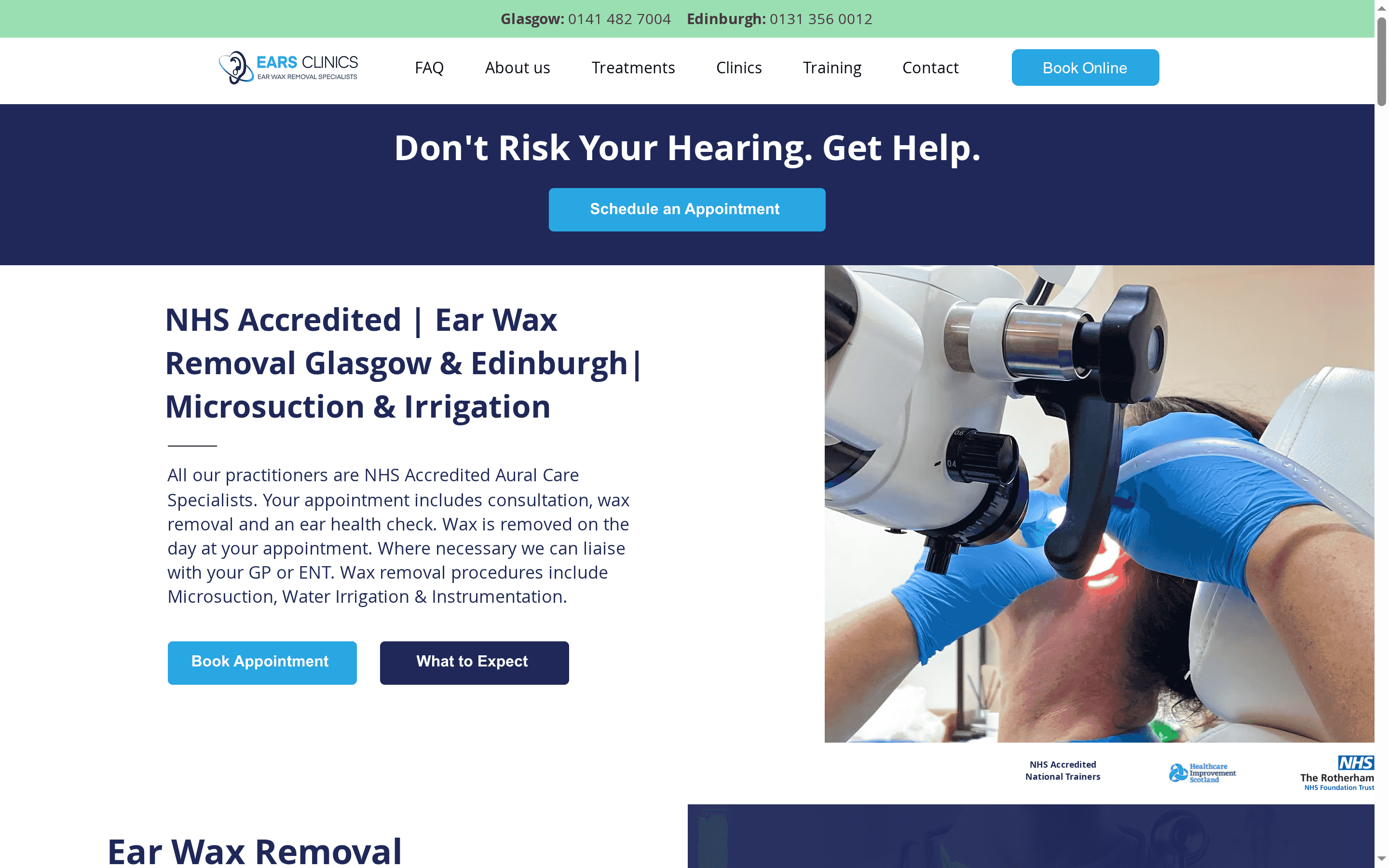
Earhealthservice operates EARS Clinics across Glasgow and Edinburgh, providing NHS-accredited ear care performed by trained Aural Care Specialists. All clinicians follow Healthcare Improvement Scotland (HIS) registered standards, and procedures are selected based on each patient’s clinical presentation and medical history. Services include safe ear wax removal using microsuction, irrigation, and manual instrumentation. Appointments are available in clinic, with same-day options and home visits at £180 for those who cannot travel. Clinic appointments start from £60 for adults. Book directly at earhealthservice.co.uk.
FAQ
What are the first signs of hearing loss in adults?
The earliest signs of hearing loss are difficulty following speech in noisy environments and frequently asking others to repeat themselves. These speech clarity problems typically appear before any noticeable reduction in overall volume.
When is hearing loss considered a medical emergency?
Sudden hearing loss developing within three days is a medical emergency. The 2026 NICE guidelines require urgent specialist referral within 24 hours, particularly when accompanied by facial numbness, balance loss, or unilateral symptoms.
Can earwax cause hearing loss symptoms?
Yes. Earwax build-up is one of the most common and treatable causes of muffled hearing and reduced sound clarity. A trained clinician can assess and safely remove it using microsuction, irrigation, or manual instrumentation.
How do I describe my hearing symptoms to a doctor?
Note whether your difficulty is with speech clarity or overall volume, whether symptoms affect one ear or both, and how long they have been present. Distinguishing these details improves diagnostic accuracy and helps clinicians triage your case appropriately.
Is tinnitus always a sign of hearing loss?
Tinnitus, a ringing or buzzing in the ears, frequently accompanies hearing loss but can also occur independently. Persistent or unilateral tinnitus warrants professional evaluation, as it can indicate underlying conditions beyond simple noise exposure.
Recommended