
What causes hearing loss: a complete 2026 guide

TL;DR:
Hearing loss is common, caused by factors like age, noise, infections, medication, and genetics, many of which are preventable. Conductive loss is often treatable, while sensorineural loss tends to be permanent, emphasizing the importance of early detection. Professional assessment and timely intervention can preserve hearing and improve quality of life.
Hearing loss is far more common than most people realise, and its causes are far more varied than age alone. You might be surprised to learn that nearly 60% of hearing loss in children stems from avoidable causes such as chronic ear infections and perinatal complications. Adults are not immune to overlooked triggers either. Medications, earwax build-up, noise exposure, and even lifestyle habits can all quietly erode your hearing before you notice any change. Understanding what causes hearing loss, recognising early symptoms, and knowing when to seek professional care are the first steps toward protecting your auditory health.
Key takeaways
Point | Details |
Multiple causes exist | Hearing loss stems from age, noise, infection, wax build-up, medication, and genetics, not age alone. |
Conductive loss is often treatable | Earwax impaction and middle ear infections frequently respond well to professional clinical treatment. |
Medications can damage hearing | Certain ototoxic drugs including aminoglycoside antibiotics and cisplatin carry a real risk of permanent hearing loss. |
Sudden hearing loss needs urgent care | Abrupt hearing change warrants prompt medical evaluation to prevent permanent damage. |
Early intervention matters | Delayed diagnosis allows auditory deprivation to set in, reducing the effectiveness of future treatment. |
Types of hearing loss and their causes
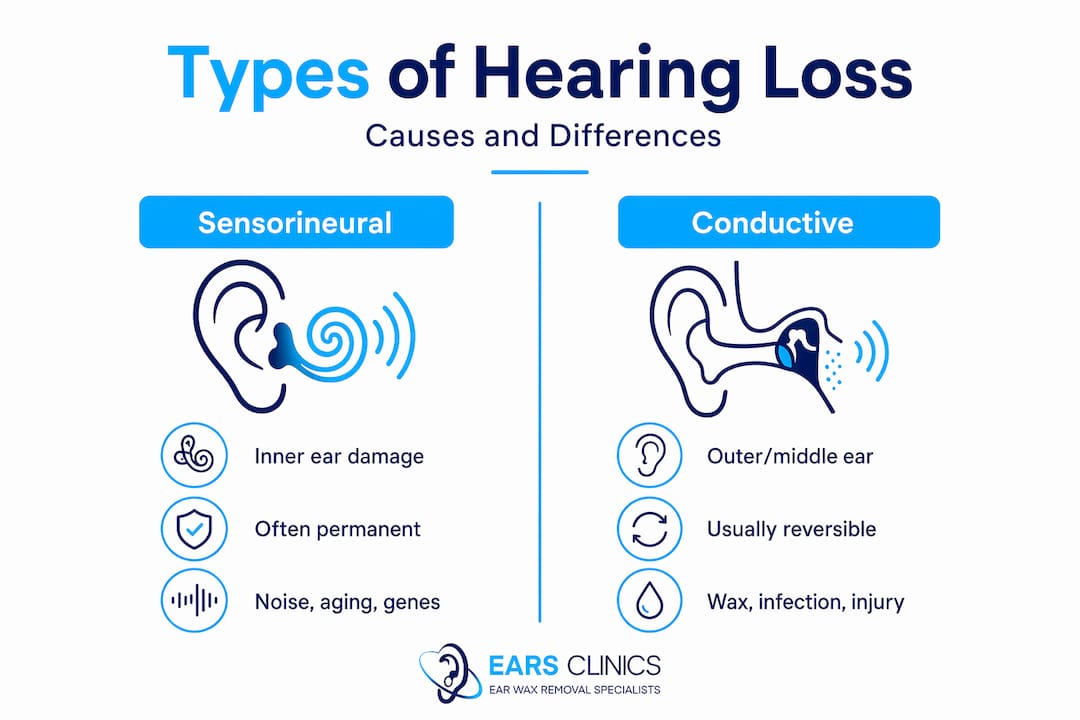
Before exploring individual causes, it helps to understand the two primary categories of hearing loss, because the category largely determines both the cause and the appropriate treatment.
Sensorineural hearing loss occurs when the inner ear (the cochlea) or the auditory nerve sustains damage. The tiny hair cells inside the cochlea convert sound vibrations into nerve signals; once damaged, they do not regenerate. This type is most commonly associated with ageing, noise exposure, genetic factors, and certain medications. Sensorineural loss is generally permanent, though hearing aids and cochlear implants can significantly improve function.
Conductive hearing loss arises when sound cannot travel efficiently through the outer or middle ear to reach the inner ear. The cause might be as straightforward as earwax blocking the ear canal, or as complex as otosclerosis, a condition where abnormal bone growth stiffens the middle ear. Crucially, conductive loss is frequently reversible with appropriate clinical treatment, distinguishing it clearly from the commonly permanent sensorineural type.
Mixed hearing loss combines elements of both. A person might have age-related inner ear deterioration alongside a middle ear infection or wax impaction that compounds the difficulty. Identifying the mix matters because treating the conductive component can restore a meaningful degree of hearing even when the sensorineural component cannot be reversed.
Type | Primary site of damage | Common causes | Typically reversible? |
Sensorineural | Cochlea or auditory nerve | Ageing, noise, genetics, ototoxic drugs | Rarely |
Conductive | Outer or middle ear | Earwax, infection, perforated eardrum, otosclerosis | Often |
Mixed | Both | Combination of the above | Partially |
Sensorineural hearing loss: causes and evidence
This is the most prevalent form of permanent hearing loss in adults, and its causes range from the unavoidable to the entirely preventable.

Ageing and hearing loss (presbycusis)
Presbycusis, the gradual hearing loss associated with ageing, is not caused by a single factor. It reflects decades of accumulated exposure to noise, oxidative stress, vascular changes, and natural cellular decline in the cochlea. High-frequency sounds typically go first, which is why older adults often struggle to follow speech in noisy environments before they notice any difficulty in quiet settings.
Noise exposure and hearing loss
Noise-induced hearing loss affects an estimated 5% of people globally as of 2023, making it the second most common sensorineural cause. Prolonged exposure to sounds above 85 decibels, whether from industrial machinery, concerts, or earphones at high volume, destroys the hair cells in the cochlea permanently. The insidious aspect is that the damage accumulates silently over years. Many people only notice when conversation becomes genuinely difficult.
Pro Tip: If you cannot hold a comfortable conversation with someone at arm’s length while in a noisy environment, the sound level is likely high enough to cause damage over time. Use hearing protection or move away.
Genetic and inherited factors
Is hearing loss genetic? Yes, in a significant proportion of cases. Mutations in genes such as GJB2, which codes for the protein connexin 26, account for a large share of congenital hearing loss. Genetic hearing loss can present at birth or develop progressively through adulthood. Family history is a meaningful clinical indicator, and genetic testing is increasingly available for those who want clarity.
Can medications cause hearing loss?
Absolutely. Certain ototoxic medications can cause permanent hearing loss depending on dose and duration of use. The main culprits include:
Aminoglycoside antibiotics (such as gentamicin and streptomycin)
Platinum-based chemotherapy drugs, particularly cisplatin
High-dose salicylates, including aspirin taken in large quantities
Loop diuretics such as furosemide
What many patients do not realise is that combining ototoxic drugs with noise exposure significantly increases cochlear hair cell damage compared to either factor alone. If you are prescribed any of these medications, requesting a baseline hearing test before starting the course is a reasonable and advisable step.
Lifestyle factors and cochlear resilience
Research into hearing loss in younger adults highlights that chronic excessive alcohol and poor diet reduce antioxidant defences in the cochlea, increasing vulnerability to auditory injury. Smoking impairs blood flow to the inner ear. These factors do not act alone, but they compound the damage caused by noise and age. Addressing them is one of the few genuinely modifiable aspects of sensorineural hearing loss prevention.
Viral infections, including mumps, measles, and meningitis, can cause sudden or progressive inner ear damage. Head trauma that fractures the temporal bone may also sever the auditory nerve or damage cochlear structures directly.
Conductive hearing loss: causes and treatment
The good news here is that many causes of conductive hearing loss are both identifiable and treatable. The challenge is that people often delay seeking help, mistaking the gradual muffling of sound for something they simply have to live with.
Earwax impaction
Earwax impaction affects up to 30% of older adults and is one of the most common, and most easily resolved, causes of hearing difficulty. When cerumen (earwax) accumulates and hardens, it can block the ear canal and reduce sound transmission significantly. The symptoms include muffled hearing, a sensation of fullness, tinnitus, and occasionally mild discomfort.
Professional removal methods include:
Microsuction: a dry technique using gentle suction, widely considered the safest option and preferred under current NICE guidelines
Irrigation: controlled water flushing of the ear canal, suitable for most patients without a perforated eardrum or history of ear surgery
Manual instrumentation: the use of specialist tools such as a Jobson Horne probe to gently remove wax under direct visualisation
Pro Tip: Avoid cotton buds entirely. They compact earwax deeper into the canal rather than removing it, which often worsens impaction and risks damaging the ear canal lining.
You can read more about safe wax removal methods to understand which approach might suit your situation best.
Middle ear infections and fluid
Acute otitis media (middle ear infection) is especially common in children and causes temporary conductive hearing loss as the middle ear fills with fluid or pus. When fluid persists after infection without becoming infected itself, the condition is called otitis media with effusion, commonly known as “glue ear.” This can significantly affect a child’s ability to hear clearly and, in turn, their speech and language development. Ear hygiene and early clinical intervention are critical in paediatric cases.
Perforated eardrum and structural conditions
A perforated eardrum can result from ear infections, barotrauma (rapid pressure change), or direct injury. Small perforations often heal without intervention, but larger ones may require surgical repair (tympanoplasty). Otosclerosis, a condition in which abnormal bone growth around the stapes bone of the middle ear reduces its mobility, can be addressed surgically through a procedure called stapedectomy. Cholesteatoma, an abnormal growth of skin cells in the middle ear, requires surgical removal to prevent serious complications. All of these conditions highlight why professional clinical assessment is not optional. It is the only reliable route to an accurate diagnosis and appropriate treatment.
Sudden hearing loss and unusual causes
Sudden sensorineural hearing loss (SSNHL) is defined as a loss of 30 decibels or more across at least three consecutive frequencies, occurring within 72 hours. It affects one ear in the vast majority of cases and can be accompanied by tinnitus or a sensation of ear fullness. The cause is often not identified, though viral infections, vascular events, and autoimmune responses are implicated. Prompt evaluation and treatment, typically oral corticosteroids, significantly improves outcomes, which is why sudden hearing change should be treated as a medical urgency.
Ménière’s disease presents with a distinctive cluster of symptoms. Ménière’s disease causes fluctuating hearing loss, tinnitus, and vertigo due to an imbalance of fluid pressure in the inner ear (endolymph). Attacks can be debilitating and unpredictable. While the condition is chronic and currently managed rather than cured, dietary changes and medication can reduce the frequency and severity of episodes.
Acoustic neuroma (vestibular schwannoma) is a benign tumour on the vestibulocochlear nerve. It typically causes unilateral (one-sided) hearing loss, tinnitus, and sometimes balance disturbance. Growth is usually slow, but early diagnosis through MRI scanning is important to guide management decisions. Any unexplained unilateral hearing change should prompt referral for specialist investigation.
My perspective on early recognition
Working in ear health care, the pattern I see most consistently is delay. Patients arrive having noticed a problem months, sometimes years, before seeking help, often because they assumed it would resolve on its own or that nothing could be done.
What concerns me clinically is that neuroplasticity can mask early hearing loss, allowing the brain to compensate for gradual change. This compensation is not a solution. It delays intervention and allows auditory deprivation to develop, which ultimately limits how well a hearing aid will work later on.
The patients who surprise me most are those who discover their hearing loss is medication-related. Nobody warned them that their chemotherapy or long-term antibiotic course carried an ototoxic risk, and a baseline hearing test was never requested. That is a gap in care that deserves attention.
My practical advice is straightforward: if you notice persistent muffling, difficulty following speech, or any sudden change in your hearing, do not wait. Conductive causes like earwax can be resolved quickly and safely by a trained clinician. And the sooner sensorineural causes are identified, the more treatment options remain available to you.
— EARS
Professional ear care that makes a real difference

If earwax build-up is contributing to your hearing difficulties, you do not need to wait weeks for an NHS appointment or resort to unpredictable home remedies. At Earhealthservice (EARS Clinics), our NHS-accredited Aural Care Specialists use clinically validated techniques to remove earwax safely and effectively. We are registered with Healthcare Improvement Scotland (HIS), one of the few regulated ear healthcare clinics in Scotland, and we treat patients from 2 years of age.
Our practitioners assess each patient’s history and clinical presentation before selecting the most suitable method, whether that is microsuction, irrigation, or instrumentation. Appointments are available in clinic, same-day, or as home visits across Glasgow and Edinburgh. Pricing starts at £60 for adults, £75 for under-18s, and £180 for home visits. Book your appointment online and take the first step towards clearer hearing today.
FAQ
What are the most common causes of hearing loss in adults?
The most common causes in adults are age-related changes to the inner ear (presbycusis), prolonged noise exposure, and earwax impaction. Ototoxic medications and underlying health conditions also play a significant role.
Can earwax really cause hearing loss?
Yes. Earwax impaction can block the ear canal sufficiently to reduce hearing. The condition affects up to 30% of older adults and is one of the most treatable causes of conductive hearing loss when managed by a trained clinician.
What causes sudden hearing loss in one ear?
Sudden sensorineural hearing loss, Ménière’s disease, and acoustic neuroma are among the most clinically significant causes of rapid, one-sided hearing change. Any sudden loss warrants prompt medical evaluation, as early treatment improves outcomes considerably.
Can medications cause hearing loss permanently?
Certain medications including aminoglycoside antibiotics, cisplatin, and high-dose aspirin carry a risk of permanent hearing damage, particularly at higher doses or when combined with noise exposure. Patients on these drugs should discuss audiological monitoring with their prescribing clinician.
Is hearing loss genetic?
Yes, genetic factors contribute meaningfully to both congenital and progressive hearing loss. Mutations in specific genes such as GJB2 are among the most common inherited causes, and a family history of hearing loss increases individual risk.
Recommended