
What is good to remove ear wax: safe UK methods

Olive oil and almond oil are the safest and most effective home remedies for earwax removal, backed by NHS guidelines. Applying 2–3 drops three to four times daily for three to five days softens wax so it falls out naturally over time. Over-the-counter drops containing carbamide peroxide or hydrogen peroxide offer a faster-acting alternative. When home treatment fails, professional removal by a regulated clinician, using microsuction, irrigation, or manual instrumentation, is the right next step.
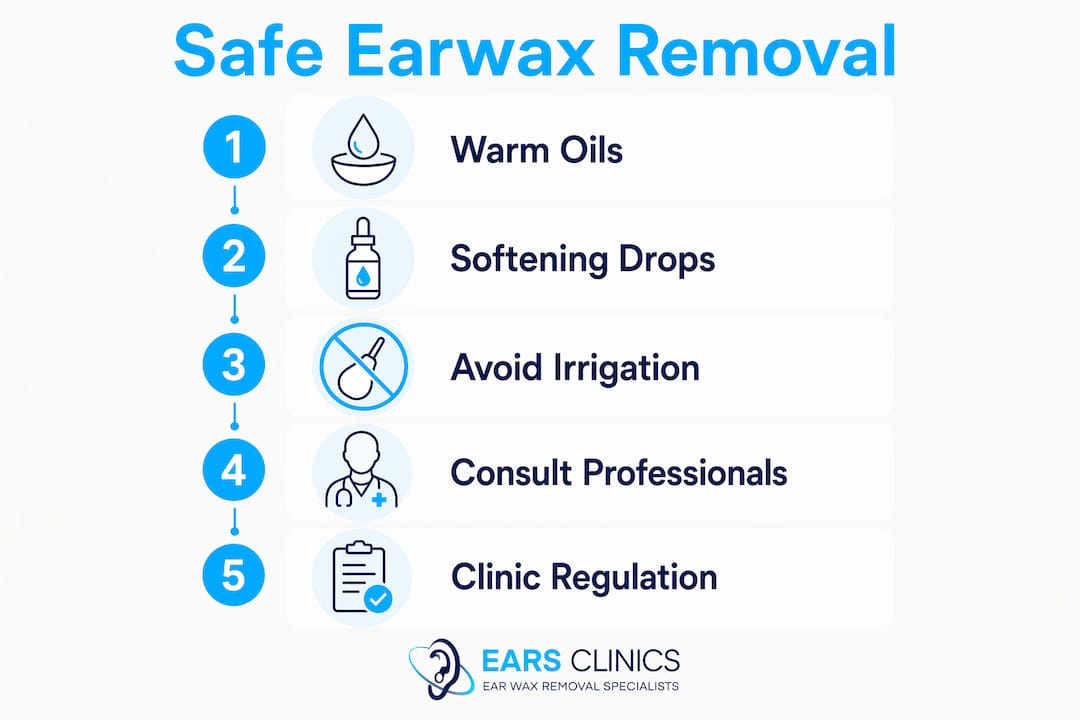
What is good to remove ear wax at home?
The ear is largely self-cleaning; earwax (cerumen) migrates outward naturally through jaw movement. Treatment is only needed when wax accumulates and causes symptoms.
Safe softening agents recommended by the NHS:
Olive oil: 2–3 drops, three to four times daily for three to five days; lie on your side for 5–10 minutes after each application. Do not use if you suspect a perforated eardrum or active infection.
Almond oil: same method as olive oil; avoid if you have a nut allergy.
Carbamide peroxide drops: 5–10 drops twice daily for up to four days. The drops release oxygen to soften wax and encourage natural expulsion.
Hydrogen peroxide drops: effective at breaking up hardened wax; dry the ear gently afterwards, as residual moisture can encourage bacterial growth.
Mineral oil or baby oil: safe softening agents available over the counter.
What to avoid entirely:
Objects inserted into the canal such as cotton buds, paper clips, or hairpins
Ear candles: no scientific evidence supports their use, and they carry a real risk of burns and trauma
Ear vacuum devices sold online without clinical regulation
How do you know if earwax is causing a problem?
Earwax buildup becomes a clinical concern when it causes noticeable symptoms. Recognising these early helps you decide whether home treatment or professional care is the right course.
Common symptoms of earwax impaction:
Partial or muffled hearing loss
A feeling of fullness or pressure in the ear
Tinnitus (ringing or buzzing sounds)
Earache or mild discomfort
Dizziness or a sense of imbalance
Common causes:
Overproduction of cerumen, which varies naturally between individuals
Cotton bud use pushing wax deeper into the bony canal, where natural expulsion cannot occur
Hearing aid or earplug use, which can block the outward migration of wax
Narrow or unusually shaped ear canals
How to safely treat earwax buildup yourself
Consistent application over several days is what makes softening oils work. A single dose rarely clears a blockage.
Step-by-step guide for oil drops:
Warm the oil slightly before use.
Lie on your side with the affected ear facing upward.
Apply a few drops of olive or almond oil into the ear canal.
Stay in that position for 5–10 minutes to allow the oil to penetrate.
Repeat several times daily for a few days.
Over time, softened wax should fall out naturally and symptoms should ease.
For carbamide peroxide or hydrogen peroxide drops:
Follow the product’s instructions carefully; most recommend 5–10 drops per dose, twice daily.
After use, tilt your head to drain the liquid and dry the outer ear gently.
Stop immediately if you feel pain, which may indicate an unrecognised perforated eardrum.
Pro Tip: Warm the oil or drops before use to avoid dizziness caused by cold liquid entering the ear canal.
Do not attempt to rinse the ear with water at home unless a clinician has confirmed your eardrum is intact.
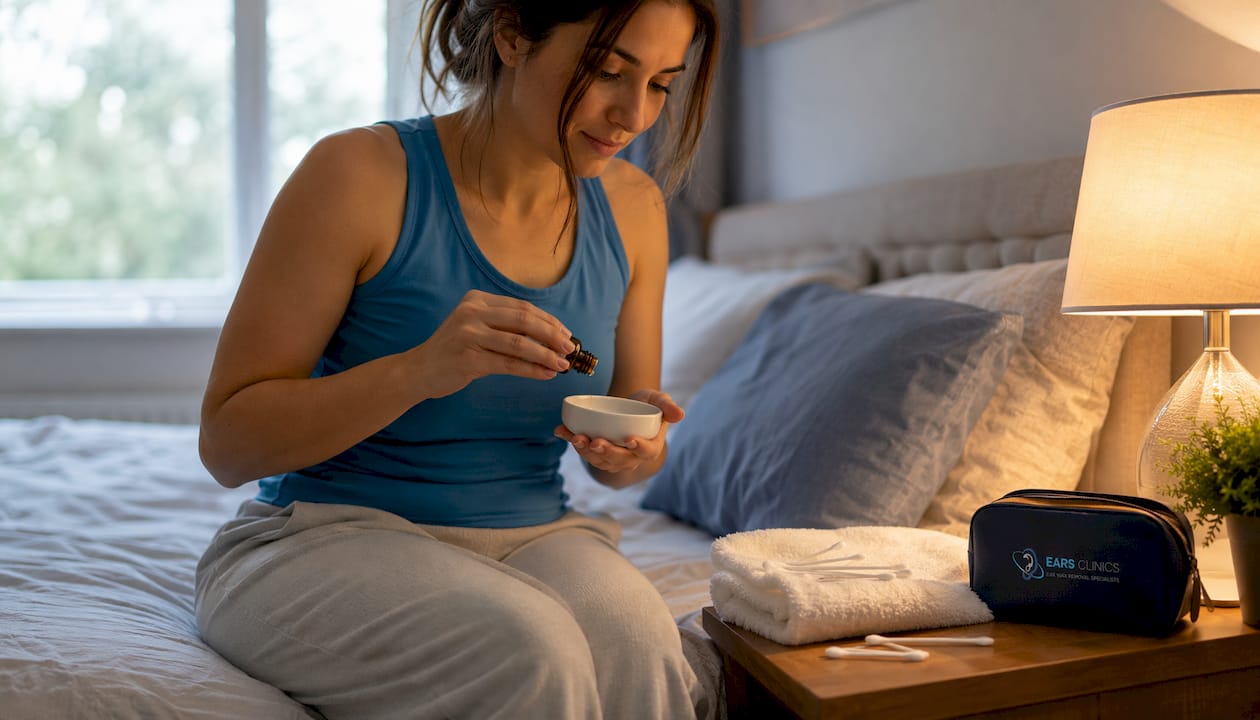
Precautions and what not to do when removing earwax
Some of the most widely used “remedies” actively worsen earwax impaction. Cotton buds are the most common culprit: rather than removing wax, they push it deeper into the bony section of the canal where the ear’s natural cleaning mechanism cannot reach, and repeated use risks eardrum rupture.
Practices to avoid:
Cotton buds or any inserted object: they compact wax and risk perforation.
Ear candles: carry no proven benefit and risk burns, blockage from candle debris, and eardrum damage.
Electronic dental water jets or high-pressure irrigation devices: unsafe for home use and can perforate the eardrum.
Unregulated ear vacuum devices: no clinical evidence supports their safety or efficacy.
Do not use any drops or home irrigation if you have a perforated eardrum, a history of ear surgery, or an active ear infection. These contraindications apply to oil drops, hydrogen peroxide, and carbamide peroxide alike.
When should you see a professional for earwax removal?
Seek professional help when home softening has not resolved symptoms after two weeks, or when symptoms are severe from the outset.
Signs that clinical intervention is needed:
Persistent or worsening hearing loss
Significant pain or a feeling of pressure that does not ease
Discharge from the ear
Dizziness or vertigo accompanying the blockage
Tinnitus that is new or worsening
NICE-endorsed professional removal methods include microsuction, irrigation, and manual instrumentation. Practitioners select the most appropriate method based on each patient’s medical history and clinical presentation.
Method | How it works | Best suited to | Key consideration |
Microsuction | Gentle suction via a fine probe under magnification | Most patients; preferred by NICE | No water used; safe for perforated eardrums |
Irrigation | Warm water flushed into the canal | Soft or moderate wax impaction | Contraindicated with perforated eardrum or prior ear surgery |
Manual instrumentation | Wax removed with a curette or fine probe | Hard or adherent wax | Requires skilled clinician; lower infection risk |

Clinics should be regulated by Healthcare Improvement Scotland (HIS) or the Care Quality Commission (CQC). EARS Clinics, which are HIS-registered, offer microsuction and irrigation performed by NHS-accredited Aural Care Specialists, with same-day appointments available in Glasgow and Edinburgh.
How to prevent earwax buildup
Prevention is straightforward for most people and reduces the need for repeated treatment.
Avoid inserting anything into the ear canal, including cotton buds, which disrupt the ear’s natural cleaning cycle.
Apply a few drops of mineral or olive oil to the ear canal weekly if you are prone to recurrent buildup; this keeps wax soft enough to migrate outward naturally.
Remove hearing aids for at least eight hours daily to allow the canal to breathe and wax to move outward.
Book a professional check-up if you experience recurrent blockages more than once a year.
Professional ear wax removal with EARS Clinics
For patients whose symptoms persist beyond home treatment, or who want the reassurance of a clinically regulated environment, EARS Clinics offers a clear and accessible route to professional care.

EARS Clinics are registered with Healthcare Improvement Scotland and follow NICE best practice guidelines for earwax removal. Appointments are available in Glasgow and Edinburgh, with home visits for patients who cannot travel. Pricing is fixed for various appointment types. There are no waiting lists, no requirement to pre-treat with oil before attending, and no referral needed. Practitioners assess each patient individually and select the safest method, whether microsuction, irrigation, or manual instrumentation, based on clinical need. Book your appointment at EARS Clinics and say goodbye to earwax buildup and hello to clearer hearing.
Key takeaways
Olive or almond oil applied consistently for three to five days is the safest and most effective home method for softening earwax, with professional microsuction the preferred clinical option when home treatment is insufficient.
Point | Details |
Best home softening agents | Olive oil or almond oil, 2–3 drops three to four times daily for three to five days. |
Over-the-counter drops | Carbamide peroxide or hydrogen peroxide drops soften and loosen wax effectively. |
What to avoid | Never insert cotton buds or objects; ear candles carry no proven benefit and risk injury. |
When to seek professional help | Persistent blockage, pain, or hearing loss after two weeks of home treatment warrants clinical assessment. |
EARS Clinics | HIS-regulated microsuction, irrigation, and manual instrumentation, with same-day appointments in Glasgow and Edinburgh. |
Recommended